Sintered vs Semi-Metallic vs Ceramic: Which Brake Pad Compound Should You Stock?
Choosing the right brake pad compound is the single most important decision a motorcycle parts distributor makes. Stock the wrong friction material for your market and you get returns, warranty claims, and riders who never come back. Stock the right one and the same customer reorders every season.
MOTOKS has produced all three major compounds — sintered, semi-metallic, and ceramic — on its own production lines in Guangzhou since 2008. Here is how we advise importers and distributors in 80+ countries to match compound to market.
Sintered brake pads (copper-based)
Sintered pads are made by fusing copper alloy particles under high heat and pressure. The result is a dense, durable friction material.
Best for: heavy motorcycles, adventure and touring bikes, riders in mountainous regions, and markets where braking performance in wet conditions matters most.
Strengths:
- Highest wear resistance — longest service life of the three compounds
- Excellent wet-weather performance; water sheds off the metallic surface
- Stable friction at high disc temperatures, minimal fade on long descents
Trade-offs:
- Higher price point per set
- More disc wear than organic materials — pair with quality rotors
- Can be noisy on light commuter bikes
Market fit: stock sintered if you serve premium street bikes, large-displacement scooters, or regions with steep terrain (South America's Andes routes, Southeast Asian highlands, Alpine Europe).
Semi-metallic brake pads
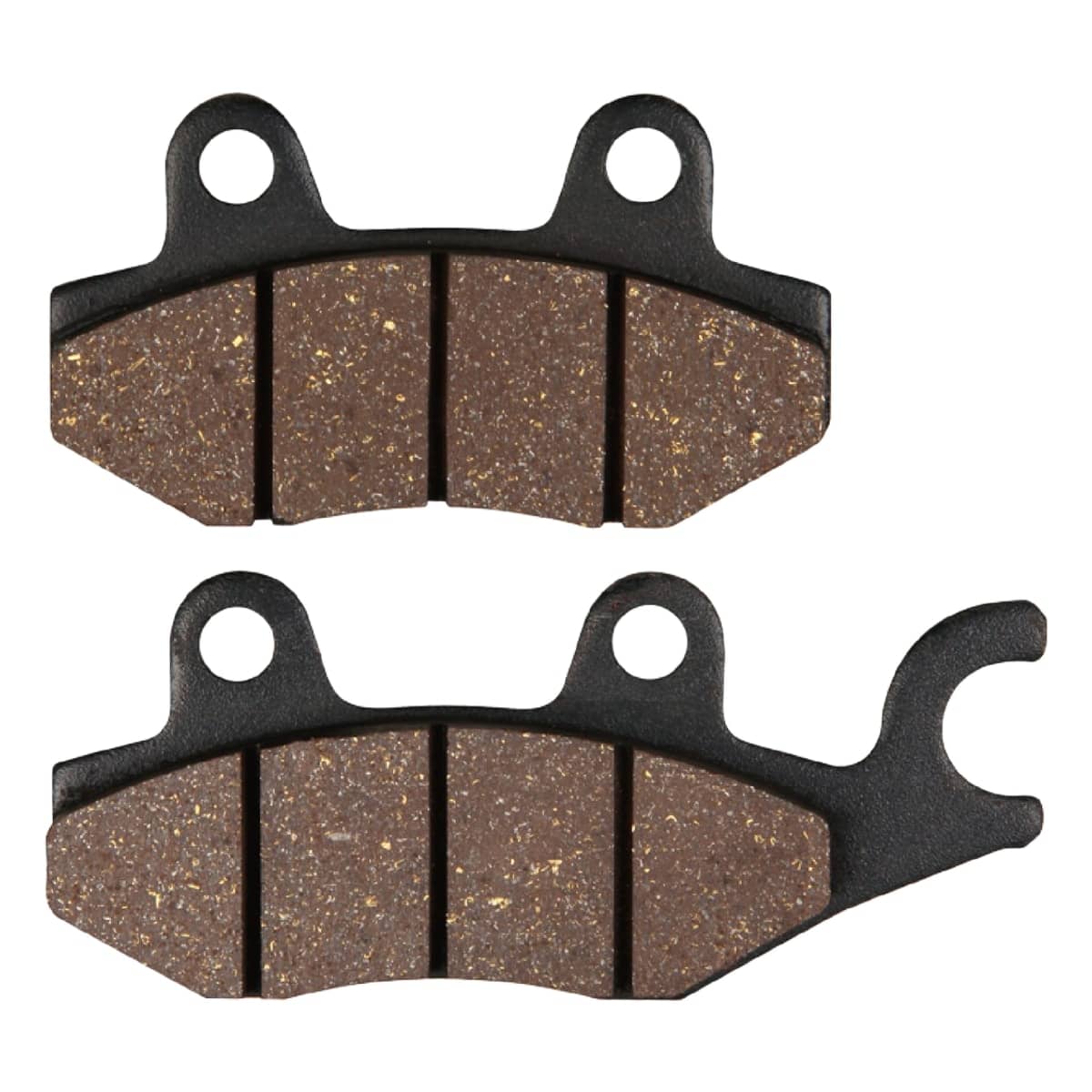
Semi-metallic pads blend 30–65% metal fibers (steel, iron, copper) with graphite and fillers. They are the workhorse of the motorcycle aftermarket.
Best for: everyday commuters, CG/CDI-series work bikes, and price-sensitive replacement markets.
Strengths:
- Balanced wear life and price — the volume seller in most markets
- Broad temperature operating range
- Predictable, familiar pedal feel for most riders
Trade-offs:
- Moderate dust generation
- Slightly longer bed-in period than ceramic
Market fit: if you distribute to African, South Asian, or Latin American commuter markets where CG125, CGL, and similar platforms dominate, semi-metallic should be your highest-volume SKU. Friction codes GG and FF cover the vast majority of these applications.
Ceramic brake pads
Ceramic pads use ceramic fibers and non-ferrous filler instead of steel wool. Originally developed for noise-sensitive applications, they have become the comfort upgrade.
Best for: scooters, premium street bikes, urban riders, and customers who complain about brake dust on alloy wheels.
Strengths:
- Quiet operation — the lowest-noise compound
- Very low dust, gentle on wheels and caliper seals
- Consistent feel from cold; excellent for stop-start city riding
Trade-offs:
- Not ideal for sustained heavy loads or extreme heat (track use)
- Highest unit cost of the three compounds
Market fit: European urban scooter markets, Japanese domestic-style commuter bikes, and any market where riders pay extra for comfort.
Quick comparison
| Property | Sintered | Semi-Metallic | Ceramic |
|---|---|---|---|
| Wear life | ★★★★★ | ★★★☆ | ★★★★ |
| Wet performance | ★★★★★ | ★★★☆ | ★★★☆ |
| Noise level | ★★★ | ★★★★ | ★★★★★ |
| Disc friendliness | ★★☆ | ★★★☆ | ★★★★★ |
| Price tier | $$$ | $ | $$ |
How we help you choose
Every MOTOKS compound line is manufactured in-house — from raw friction material to 100% final inspection — so we can adjust hardness, friction code (GG / FF / FE), and backing plate spec to your market's riding conditions. MOQ starts at 100 pieces per model, and mixed models can be combined in one container so you can test two or three compounds against your market before committing volume.
Next step: send us your target motorcycle models and market climate, and our engineers will recommend a starting compound mix. Request a quote at www.motoks.com/oem-odm.