Friction Codes Explained: What GG, FF, and FE Actually Mean on a Brake Pad
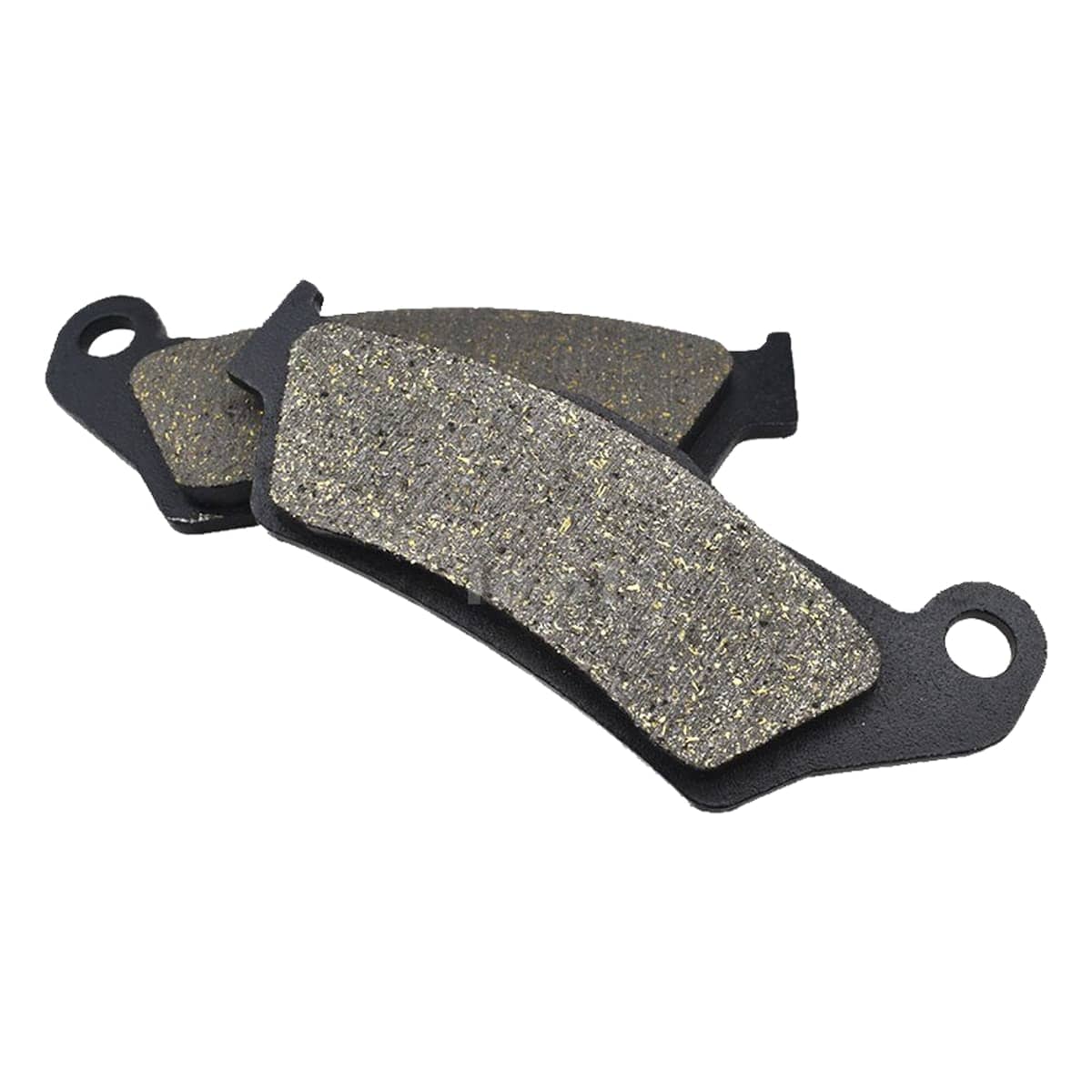
Open any brake pad catalog and you'll see two letters stamped on the box: GG, FF, FE. Most buyers ignore them and order on price. That's a mistake — these two letters describe how the pad actually behaves when hot, and they are the difference between a pad that works in your market and one that comes back as a warranty claim.
Here is the plain-English version, without the SAE standard's legal language.
Where the code comes from
The code is defined by SAE J866 (the friction coefficient identification system). Each pad is tested and assigned a normal friction coefficient (μ) measured at two temperature bands:
- First letter — friction at 200°F (93°C), i.e. normal operating temperature
- Second letter — friction at 600°F (316°C), after repeated hard braking
Each letter maps to a coefficient range:
| Letter | Friction coefficient (μ) | Character |
|---|---|---|
| E | 0.25 – 0.35 | Low, stable, gentle on discs |
| F | 0.35 – 0.45 | Medium — the industry baseline |
| G | 0.45 – 0.55 | High bite, more aggressive |
| H | 0.55 – 0.65 | Very high — race-oriented |
So GG means μ 0.45–0.55 both cold and hot. FF means 0.35–0.45 at both temperatures. FE is the interesting one: medium-hot friction but lower cold friction.
What each common code means in practice
FF — the volume baseline
Covers most street and commuter bikes. Predictable, quiet, disc-friendly, and cheap to produce. If a distributor asks for "standard quality," this is what they get.
Stock FF for: commuter bikes, work bikes, small-displacement markets, price-sensitive segments.
GG — the performance default
Noticeably stronger initial bite. Most OEM pads on mid-range motorcycles are GG or FG. Semi-metallic and sintered compounds usually land here.
Stock GG for: sport and premium street bikes, heavier bikes, markets with hilly terrain, riders carrying loads.
FE — the specialist
Lower friction when cold, medium when hot. Feels "wooden" to a rider used to GG on the first few stops, then performs well. Common in ceramic comfort compounds and some OE applications where low dust matters more than initial bite.
Stock FE for: comfort-focused markets (urban scooters, premium commuters) — but warn customers about the cold-bite feel, or you'll get "these brakes feel weak" complaints.
What the code does NOT tell you
Three things buyers assume the code covers — it doesn't:
- Wear rate. A GG pad from one factory can wear twice as fast as a GG pad from another. Friction grade says nothing about lining hardness or filler abrasiveness.
- Disc friendliness. Nothing in the code measures rotor wear. A high-metal GG pad with coarse filler can groove a disc; a well-formulated GG pad won't.
- Fade resistance beyond the test. The 600°F test point is one data point, not a curve. Sustained mountain descents or track use expose behavior the code can't describe.
That's why the code is a starting filter, not a purchase decision. Two pads can share a GG code and be completely different products.
How to use the code when sourcing
When you send an inquiry, specify the code you need — it forces a professional supplier to talk compound, not just price:
"We need GG friction code, semi-metallic, for 125–150cc commuter applications, 4.5mm thickness, MOQ 100 pcs/model."
A supplier who can't confirm the code, or who says "all our pads are high quality," is repackaging. A manufacturer knows the code for every SKU and can tune it — friction code is a design parameter, not a label you print afterwards.
Our range
Every MOTOKS brake pad SKU is specified with an explicit friction code, printed on the backing plate and the box:
- GG — sintered and semi-metallic performance lines
- FF — standard semi-metallic commuter lines
- FE — ceramic comfort lines
We can also adjust compound hardness and filler to hit a target code for your market, with the code verified by test before production.
Ask for spec sheets with friction codes: www.motoks.com/contact