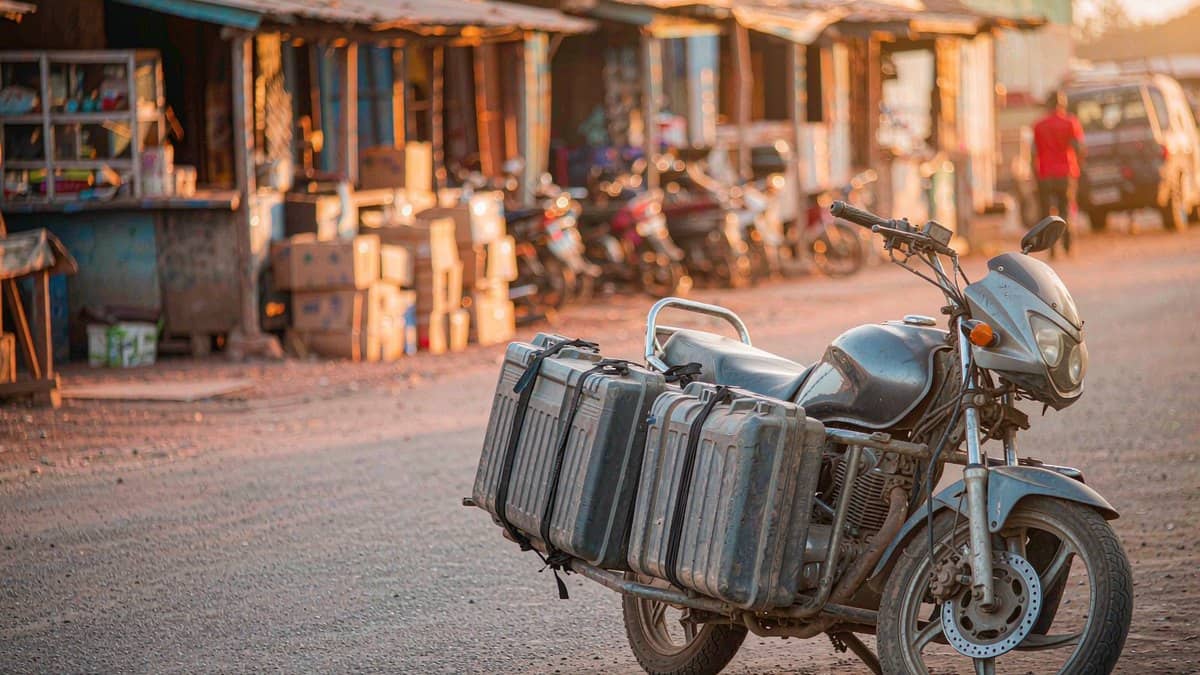
Bajaj Boxer 150: A Parts Stocking Guide for Africa's Busiest Working Bike
The Bajaj Boxer 150 is not sold as a commuter — it is sold as a work vehicle. Across Nigeria, Kenya, Uganda, Tanzania and Ghana it is the boda-boda taxi, the delivery bike and the farm truck, routinely carrying two passengers, a goat, or 150kg of cargo on roads that would be called trails elsewhere. That duty cycle rewrites the parts demand profile: everything that touches load — chains, sprockets, clutch, brakes, suspension, wheels — wears at multiples of the commuter norm, and crash consumables move like wear parts. Stocking the Boxer line with commuter assumptions is the fastest way to disappoint the market.
The Duty Cycle Drives Everything
Before the parts list, internalize the usage pattern: 200–300 km per working day in taxi service, chronic overloading, minimal maintenance intervals, and dust or rain on every route. Under that regime a front sprocket lasts 8,000–12,000 km, clutch plates survive 10,000 km, and a rear tire can be gone in 7,000. Parts demand is therefore high-frequency and price-sensitive — but quality still wins, because a failed part costs the rider a day of income. The winning SKU is not the cheapest; it is the one that survives the load cycle and stays affordable. That is also why Boxer operators strongly prefer parts their mechanic already trusts — see our regional market guide for how this pattern repeats across the continent.
The Wear-Parts Map
Chain and Sprockets — The Volume King
Nothing moves faster on a Boxer than the drive line. Overloaded bikes stretch and wear chains quickly, and worn chain plus worn sprockets eat each other faster — so the market standard is the full kit: chain, front and rear sprocket together. Stock heavy-duty chains (thicker side plates, quality seals) as your headline SKU; the price gap over economy chains is small against a doubled service life, and mechanics learn quickly which kit lasts. Rear sprockets for the Boxer family are high-wear (tooth profile sharpening is the classic overload symptom) — carry them in depth. Our O-ring vs X-ring guide explains the seal-quality difference that justifies the premium.
Clutch
The Boxer's clutch lives a hard life: constant clutch-work in traffic, half-engaged crawling with passengers, and overload that demands more torque than the plates were sized for. Friction plate sets plus springs are the core SKU; the clutch housing/basket follows at high mileage. Key the assortment to the genuine Bajaj part numbers — the Boxer 150's clutch architecture differs from the 100/125 models, and mixing them across the family is a common listing error.
Brakes
Most Boxer variants run drum brakes front and rear; some 150X variants carry a front disc. For drum models, brake shoes for both ends are constant rotation, with the rear wearing hardest under load. For disc variants, stock pads in a durable compound — see our compound comparison; sintered pads earn their price on loaded bikes. Brake cables and levers belong here too: they are the first casualty of a tip-over.
Crash Consumables — A Line Commuter Catalogs Miss
This is the Boxer-specific insight: on a working taxi fleet, parts that never wear on a private bike move weekly. Brake levers, gear levers, mirrors, indicator assemblies, footrests and their brackets, side covers and headlight units all live in the crash-consumables tier. Carry them in volume, at accessible price points, in matched left/right pairs — and expect the demand to be steadier than any engine part. A distributor who treats these as an afterthought loses the daily visit from the spares shop.
Suspension and Wheels
Overload and broken roads destroy suspension quietly. Rear shock absorbers (bushing play and oil loss within 15,000–20,000 km in taxi service), front fork oil seals and bushings, and steering stem bearings form the line. Spoked wheels demand their own tier: rear spokes and rims wear from cargo and potholes, and wheel-bearing sets move steadily. Our shock wear guide gives the workshop diagnosis that sells these parts.
Engine Top End
The 150cc engine is robust, but constant load accelerates the basics: piston and ring sets, valves and guides, cam chain and tensioner, and head gaskets. Complete gasket sets sell with every top-end job. Carburetor demand centers on the complete unit (the Boxer's carburetor is Bajaj-specific in its cable and choke geometry — stock by OEM number, not by bore), plus fuel taps and air filters, which are consumed monthly per bike in dusty service.
Pricing for the Working-Bike Channel
The Boxer channel buys differently from a consumer channel, and pricing structure should follow. Working riders convert every part into cost per day: a chain that lasts twice as long at 40% higher price wins the moment the mechanic does that arithmetic — so publish the arithmetic for them, in durability terms they recognize (plate thickness, seal type, sprocket tooth profile). Within each wear line, offer two tiers and resist a third: an economy tier for cash-tight weeks and a heavy-duty tier for operators who have already experienced a roadside failure. A third middle tier blurs the message and splits the counter's credibility. Price crash consumables aggressively and unapologetically — the mirror or lever that breaks in a tip-over is replaced on emotion and convenience, and it is the part that brings the customer through the door for the profitable wear-line sale behind it.
The Spares Shop Relationship
Distribution in Boxer markets runs through roadside spares shops that restock daily or twice weekly, not monthly. That cadence favors suppliers who can ship small, mixed, frequent cartons with stable part numbering — the shop's wall has one hook per SKU and no patience for suppliers whose boxes change size or label. It also favors depth in the SKUs the shop can predict: chains, shoes, cables, levers, filters and bulbs turn over mechanically with fleet mileage, so a standing weekly order covers most of the wall, with specials ordered on demand. For the distributor, this means the selling work happens once — winning the wall position — after which the line replenishes itself on schedule. Reliability of supply, not discounting, is what keeps that position.
Stocking Logic Specific to the Boxer Line
- Depth over breadth. One platform, deeply stocked, beats three platforms thinly. The Boxer market is concentrated enough to support a full wall of its SKUs.
- Price-tier within each SKU. Offer economy and heavy-duty versions of chains, shoes and shocks; the market splits between price-first and durability-first buyers, and capturing both doubles the counter's relevance.
- Match the mechanic, not just the bike. Boxer repairs happen in small roadside workshops; parts that install with common tools and fit right the first time win repeat business. Consistent fitment is a quality claim you can make only with disciplined suppliers — this is a core selection criterion in our manufacturer vetting checklist.
Our clutch kit, brake pad and shock absorber ranges cover the Boxer's highest-rotation lines with per-SKU fitment data — and for distributors building a Boxer-focused brand, our OEM/ODM program supports custom packaging and part numbering against the platform's real demand structure.