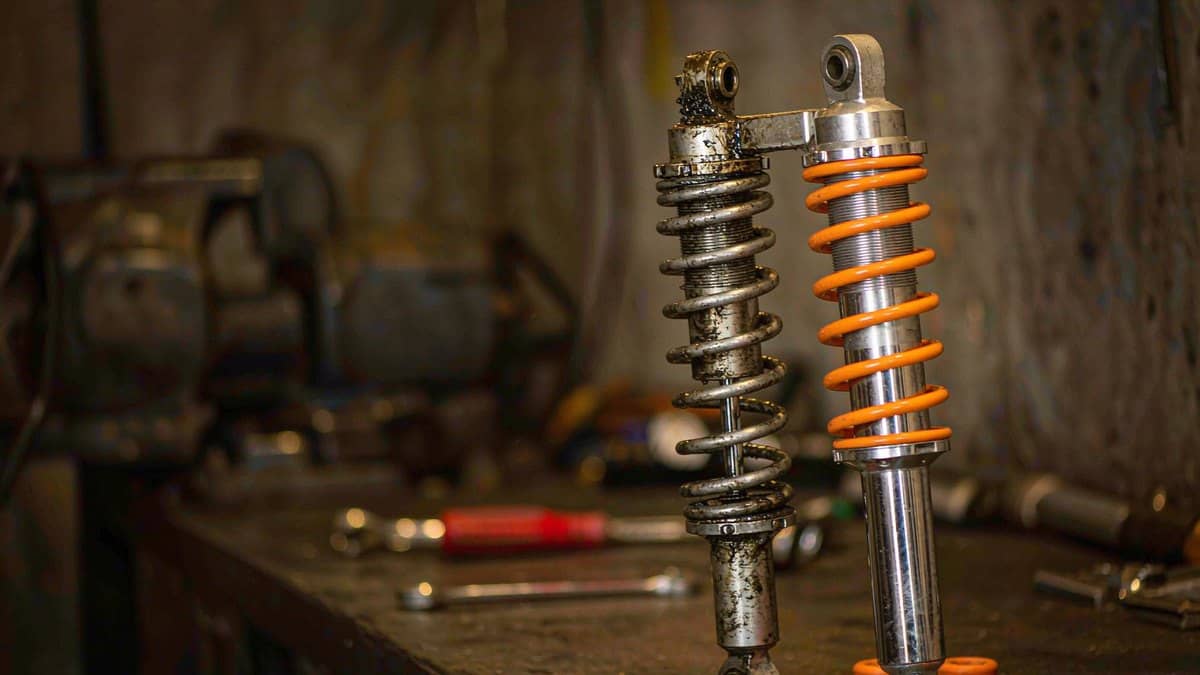
7 Symptoms of Worn Motorcycle Shock Absorbers (and When to Replace Them)
Shock absorbers fail quietly. Unlike brakes or chains, a worn shock rarely announces itself — the bike just gradually rides worse, tires wear strangely, and the owner adapts without noticing. For workshops this makes suspension a missed-revenue category; for distributors it explains why shock demand is steady rather than seasonal. Here are the seven symptoms that actually matter, with a practical severity scale for each.
1. Oil on the Shock Body (Grade It, Don't Panic)
The most visible symptom — but not every oily shock needs replacing. Grade it:
- Light film. A thin oil mist on the body is normal; the rod carries oil past the seal on every stroke. Wipe it and check again in a month.
- Wet ring with dust buildup. Oil collecting dust into a distinct ring around the seal means the seal is worn. The damper still works but is losing fluid — plan replacement within a service cycle.
- Visible drips or oil running down. The damper is already compromised. Handling is degrading now, and the fork spring or linkage is taking loads it was not designed for.
On commuter bikes ridden on dust roads, the dusty wet ring is the stage where replacement is cheapest for the customer — before internal damage reaches the spring seat and linkage.
2. Excessive Bouncing After Bumps
The classic bounce test (push the rear down hard and release) is crude but not useless: more than one rebound cycle points to lost damping. The better field test is riding — a bike that continues pitching after a series of bumps has dying rebound damping. Riders describe it as "the rear feels alive" or "floaty on rough roads". What they are feeling is the wheel skipping instead of tracking.
3. Bottoming Out
A sharp clunk through the frame on potholes or when carrying a passenger means the shock has lost both travel control and gas charge (if fitted). Occasional bottoming on the worst holes is normal for a loaded commuter bike; regular bottoming at moderate speed is not. Note that bottoming can also come from a sagged spring — check free length and rider sag before condemning the damper.
4. Worsening Brake Dive and Acceleration Squat
Worn damping shows up in weight transfer: exaggerated nose-dive under braking, squat under acceleration, and a bike that pitches visibly when opening or closing the throttle. Because it develops slowly, ask the customer to compare against a same-model bike — the contrast makes the symptom obvious enough that they will approve the replacement they had been postponing.
5. Irregular Tire Wear (Cupping)
Scalloped or cupped wear across the rear tire tread — series of high and low patches around the circumference — is the suspension failure written in rubber. A skipping wheel cannot wear evenly. When a customer comes in for "a tire that keeps going weird", check the shock before blaming the tire; fitting new rubber onto a dying damper destroys the new tire the same way.
6. Knocking or Creaking Noises
Clunks on sharp bumps can be worn bushes or mounts rather than the damper itself — check bushings first because they are the cheap fix. Persistent creaking or groaning under load often indicates a dry or scored seal running on a pitted rod, which means the shock internals are already damaged and the bushing alone will not save it.
7. Instability When Loaded or in Wet Conditions
The safety-critical symptom. A bike that wanders at highway speed, feels vague mid-corner, or suddenly feels worse in the rain (where grip margins are thin) is showing degraded wheel control. For fleet operators this symptom has a direct cost line: tire life, rider fatigue and incident risk all move together.
A One-Minute Inspection Script for the Workshop
Structure the check so any apprentice can run it consistently:
- 0-10 seconds, look: oil ring on the rod, dust buildup at the seal, physical dents, bushing play by hand.
- 10-25 seconds, push: hard press on the rear and release — count rebound cycles and listen for clunks.
- 25-45 seconds, measure: rear sag with rider aboard, or at minimum free spring length versus spec.
- 45-60 seconds, tire: run a hand across the rear tread — cupping edges confirm damping loss even when everything else looked acceptable.
Write the verdict into one of three boxes: OK / monitor (oil film, one rebound cycle) / replace (wet ring plus any handling symptom). A written verdict converts a vague complaint into an approved sale, and builds the habit that brings the customer back at the next service interval.
How Long Should Shocks Last?
Honest intervals for commuter-segment bikes, which is where most replacement volume sits:
- Standard commuter bikes (CG/Boxer/Wave class), paved roads: 40,000-60,000 km or 3-4 years for the rear pair; front fork oil every 20,000-30,000 km with seal inspection.
- Unpaved or heavily loaded duty: halve those numbers. Fleet taxis on rough roads commonly replace rear shocks at 20,000-30,000 km.
- Progressive signs, not just mileage: any two symptoms above together justify replacement regardless of the odometer.
Advising on condition rather than a fixed interval builds trust — and customers who trust a workshop's diagnosis come back for the parts.
Replace in Pairs — and Say Why
Rear shocks wear as a pair even when only one leaks: the worn unit makes the healthy one carry extra load, and a mismatched pair makes the bike squat unevenly under braking. The same logic runs front-to-rear: fresh rear shocks fitted to a front end full of dead fork oil simply move the vagueness to the front wheel. Pair replacement is also the honest answer to the customer who asks to fix only the leaking side — it costs slightly more today and prevents the return visit that costs the relationship. For distributors, pair-replacement norms mean pair-packaged SKUs move faster than singles in workshop channels.
Stocking Notes by Platform
Demand for replacement shocks concentrates heavily on the platforms covered in our market guide: CG and Boxer families in Africa, Wave and Mio scooters in Southeast Asia. Three stock rules follow from that concentration. First, carry the high-volume platforms in complete-unit form and leave rare fitments to special order — a shock that sits two years on the shelf costs more than the margin it eventually earns. Second, state load rating and gas charge clearly per SKU; fleet buyers decide on those two numbers, and vague listings lose them. Third, keep fork oil and seal kits alongside complete shocks — the workshop doing one job almost always needs the other, and the kit sale costs you nothing to win.
Choosing the Replacement
Two decisions matter when stocking or recommending:
- Match the duty cycle. A basic twin-tube unit suits light urban use; heavy-duty or gas-charged units pay for themselves on loaded fleets and rough roads. Our guide to emulsion vs reservoir shock designs explains where each design earns its price.
- Set it up properly. A correct replacement installed at the wrong sag rides as badly as the worn part it replaced. Rider-sag setup takes minutes and we cover the procedure in our sag adjustment guide.
For catalog coverage, our shock absorber range is indexed by platform — CG, Boxer, Wave, Mio and other high-volume commuters — with load ratings stated per model so fleet buyers can match duty cycle without trial and error.