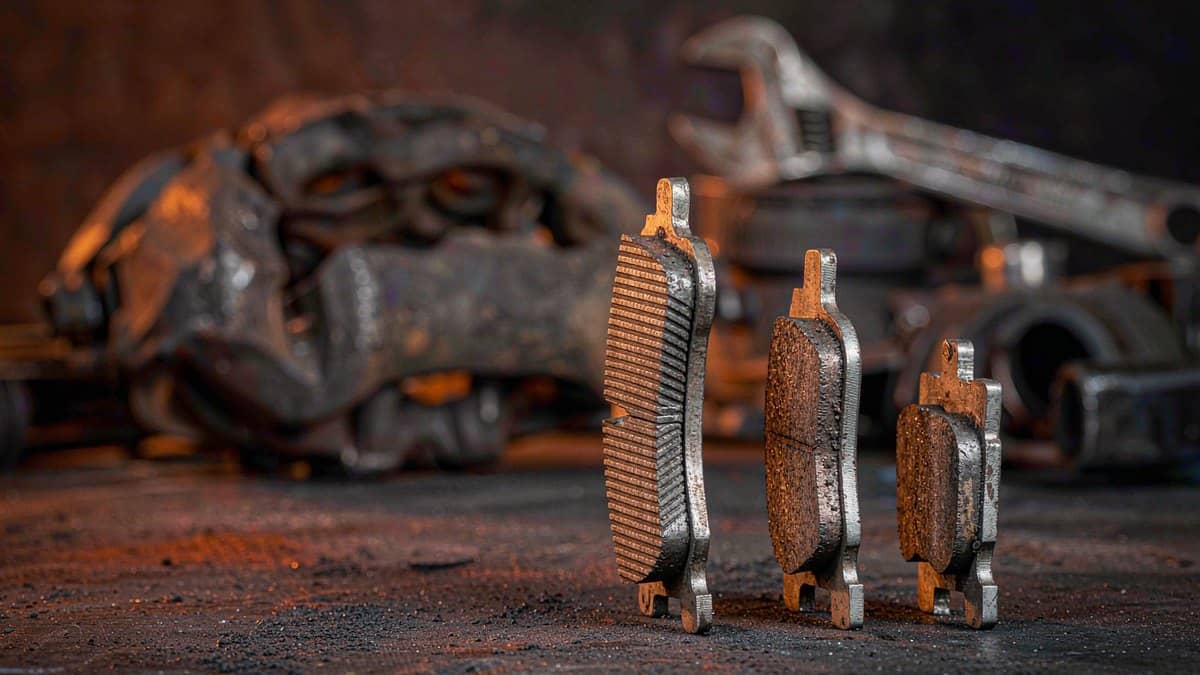
How Long Do Motorcycle Brake Pads Last? Mileage Reality by Pad Type and Riding Style
Ask ten riders how long brake pads last and you will get answers from 5,000 to 40,000 kilometers. Everyone is right, because pad life is not a property of the pad — it is a property of the whole system: pad material, disc condition, bike weight, load, terrain, climate and above all riding style. For a distributor or workshop, understanding the realistic ranges is what turns a vague customer question into a confident recommendation.
The Baseline Ranges
Across commuter motorcycles in normal service, the honest ranges are:
- Organic (NAO) pads: 8,000–15,000 km. Gentle on discs and quiet, but the friction material wears fastest, and wet performance drops off earlier in their life.
- Semi-metallic pads: 12,000–20,000 km. The all-rounder for commuters; most OEM fitments sit here.
- Sintered pads: 15,000–25,000 km on commuters, less on hard-used bikes. Highest and most stable friction across temperature and weather, at the cost of faster disc wear and a characteristic bite that unaccustomed riders find grabby.
Front pads wear two to three times faster than rear on most bikes — under braking, weight transfers forward and the front does most of the work. A customer replacing fronts at 12,000 km should expect the rears to run to 25,000–30,000 km.
What Cuts Pad Life in Half
The averages above collapse quickly under real-world load:
- Two-up and cargo. A commuter carrying a passenger and a load of goods can double pad wear. In delivery and taxi service, 6,000–8,000 km per front set is normal.
- Mountain and stop-go urban riding. Descents with constant drag, or city blocks with a stop every hundred meters, multiply the number of heat cycles. Heat cycles, not distance, are what actually consume friction material.
- Riding the brake. Riders who cover the lever wear pads continuously at low pressure — the worst regime for the material, since it polishes the surface and glazes the pad.
- Sand, dust and rain. Abrasive contamination acts like lapping compound. Coastal and desert markets reliably see shorter pad life than the same bikes see inland.
- Sticking caliper pins. A slider pin that no longer slides keeps one pad dragging. The pad wears to nothing in a few thousand kilometers and takes the disc with it. Any pad worn drastically unevenly (inner versus outer, or edge to edge) points here first.
Material Choice Changes the Math
The three compounds trade longevity against feel, disc wear and price. We compare them in detail in our pad material guide; the summary for stocking purposes:
- Sintered wins longevity and wet performance — the default recommendation for delivery fleets, mountain routes and heavier 150–200cc commuters.
- Semi-metallic wins the price-life balance for everyday commuters and is what most replacement demand defaults to.
- Organic wins for light bikes and riders who prioritize gentle disc wear and quiet operation.
One compound note that matters commercially: switching a customer from organic to sintered typically extends pad life but accelerates disc wear. Quote both together — pads plus a realistic disc-replacement interval — or the perceived savings evaporate in the next disc purchase.
The Wear Indicators That Beat Mileage
Mileage is a planning tool; the pads themselves are the measurement. Teach the workshop checklist:
- Visual check through the caliper. Most calipers expose enough of the pad to see the friction material against its backing plate. Below roughly 2mm of material, replacement is due; below 1mm, overdue and scoring the disc.
- The pad wear groove. Many pads carry a groove cast into the friction material. When the groove disappears, the pad is at its service limit.
- Brake feel and noise. A lever that travels further than it used to, a metallic scraping sound at low speed, or a grinding noise on application all indicate material at or past the backing plate.
Our minimum thickness guide gives the exact millimeter limits to quote against each check.
Compound Myths Worth Correcting at the Counter
Three myths cost counters sales. Myth one: harder pads last longer. Friction material hardness has almost no correlation with wear life — the binder system and abrasive package do — yet customers still ask for "hard pads." Explain wear life as a material-system property and the conversation moves to compounds that genuinely last (sintered, for their use case). Myth two: disc damage means the pad was cheap. Disc wear is a pad-property too — sintered compounds trade disc life for pad life — so a worn disc under good pads is a system outcome, not a defect. Myth three: pads last longer if you brake gently all the time. Light braking polishes and glazes the surface; properly aggressive braking keeps friction material fresh. The bed-in exists precisely because pads need real heat cycles to perform — teaching it is the single best counter-service you can add to every pad sale.
Pad Life by Market Segment
Segment the market before setting default recommendations. Private commuters riding one to two hours daily in mixed traffic sit in the middle of the ranges above. Delivery and taxi fleets in dense cities halve them — plan fleet accounts around 6,000–10,000 km front-pad cycles and sell on cost per kilometer, not price per set, because fleets replace pads monthly and can compare. Hilly and mountain markets burn sintered fronts fastest and also consume discs sooner; quote the two lines together. Rental and training fleets are their own segment: riders unfamiliar with the bike brake late and hard, and pad consumption doubles while disc wear accelerates. Each segment buys differently, and a counter that sorts its pad SKUs by segment sells more accurately than one that sorts only by bike model.
Storage and Seasonal Factors
Pads age even when the bike does not move. Moisture wicks into the friction material during long storage, and the first hard stops after a rainy season feel weak until the pads dry and re-seat — a pattern behind a wave of "weak brakes" complaints every season start. Seized caliper pins after storage are the other classic: the bike sits, the pin corrodes, and the first month of riding wears one pad dramatically unevenly. Workshops that know the pattern sell a pin-service-plus-pad-check in the season-start service, and distributors in seasonal markets should time pad promotions to the weeks before it. None of this appears in any mileage table, and all of it moves boxes.
What This Means for Stocking
Pad demand is highly predictable once you segment your market. Delivery fleets and mountain-route regions burn through sintered fronts on a 6,000–10,000 km cycle; urban commuter markets default to semi-metallic replacements at 12,000–20,000 km. Rear pads move at roughly half the front rate. Key the assortment to the dominant platforms (CG family, Boxer family, Wave/Alpha family, Pulsar family) and carry pads for the same SKU in both compounds where the market is mixed.
New pads also need a proper bed-in procedure — a workshop that skips it sees glazed pads, complaints of weak braking, and unnecessary warranty returns. Include the bed-in card in every box; it costs nothing and prevents the most common quality complaint in the category.
Our brake pad range covers the major commuter platforms in all three compounds, with per-SKU compound and fitment data published for exactly this kind of segmentation — and routine care habits that extend life are collected in our brake system care guide.