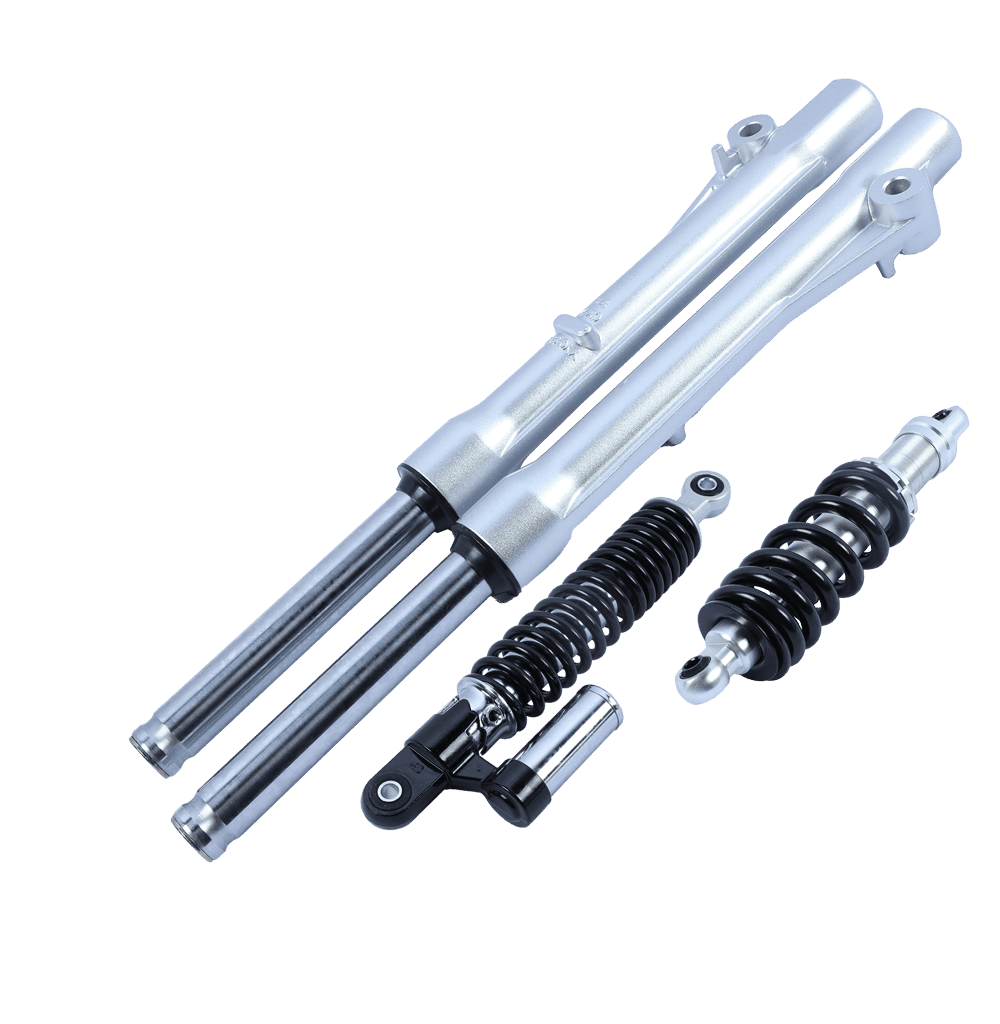
Diagnosticar un amortiguador trasero en cuatro pasos
Rear shock absorbers are usually replaced later than they should be, because the failure is gradual and riders adapt to it without noticing. By the time the bike is brought in, the symptom being described is often unrelated to the real fault.
Step one: look for oil
Any oil film on the piston rod, or dirt clinging to the rod in a ring pattern, means the seal is passing. A damper that has lost oil has lost damping, and no adjustment will bring it back.
Oil on the spring is the later stage — the leak has been running long enough to migrate. If the spring is wet, the part has been failing for a while.
Step two: check static sag
Measure the distance from axle to a fixed point with the bike unladen, then with the rider aboard. If the sag is excessive and the preload adjuster is already near its limit, the spring has softened or is undersized for the load the bike actually carries.
This check separates a spring problem from a damper problem, which matters because the two have different fixes and riders often ask for the wrong one.
Step three: test rebound by hand
With the bike supported and the shock removed, compress it firmly and release. A healthy damper returns in a controlled way and stops. One that springs back quickly and oscillates has lost rebound damping. One that compresses easily with almost no resistance has lost compression damping as well.
Compare both sides on a twin-shock bike. A mismatch between left and right is a common cause of a handling complaint the rider describes as "the back end feels loose".
Step four: check the mounts and the geometry
Worn bushings produce a clunk and a vague rear end that feels like a damper fault but is not. Check the bushings and the mounting bolts before condemning the unit.
Also check for a bent rod. A bike that has been ridden with a collapsed damper often bends the rod, and a bent rod will destroy the new seal within a few hundred kilometres.
The symptom that means stop riding
If the spring is contacting the frame or the tyre, or if the damper has separated at the eye, the bike is not safe to ride. That is not a wear item any more — it is a structural failure, and it should be treated as one.
Comentarios (0)
Aún no hay comentarios. ¡Sé el primero en comentar!