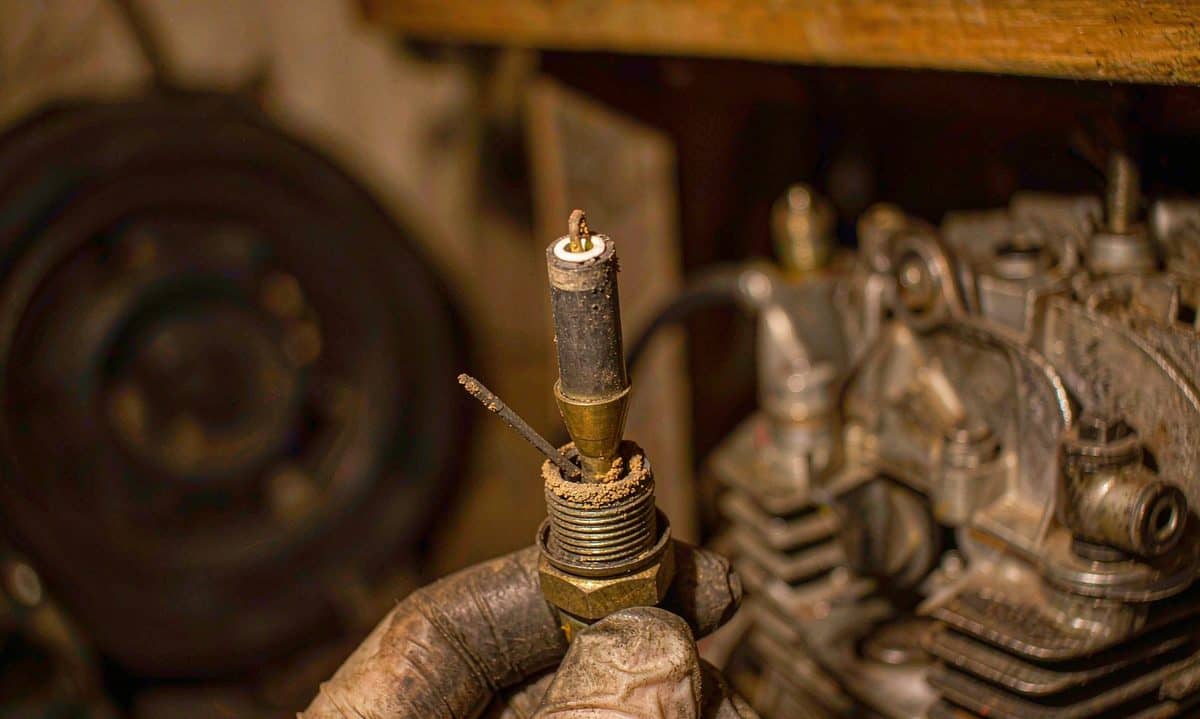
Reading a Spark Plug to Diagnose Carburetor Jetting
Before you buy an air-fuel-ratio meter, learn to read the sensor you already have. A spark plug tells you what mixture the engine saw at the moment you shut it off — if you read it correctly.
The plug chop, done properly
The classic procedure still works because nothing has replaced it at this price:
- Fit a fresh plug of the correct heat range.
- Ride in the gear and throttle position you want to evaluate — typically wide-open throttle in third or fourth for main-jet diagnosis.
- At the end of the run, pull the clutch, kill the engine and coast to a stop. Do not idle before stopping; idling repaints the insulator with a mixture that has nothing to do with your main jet.
- Pull the plug and read the porcelain near the electrode, not the metal threads.
What the colours mean
| Insulator colour | Mixture | Correction |
|---|---|---|
| Light tan / coffee | Correct | None — note the jet number |
| White, chalky, or blistered | Lean — dangerous at WOT | Richen main jet immediately, re-check |
| Dark brown to black, sooty | Rich | Drop main jet one to three sizes, re-test |
| Oily, wet, black | Oil fouling, not jetting | Check rings, valve seals or premix ratio first |
For part-throttle diagnosis the needle controls the story: a rich mid-range with a correct top end usually wants the needle clip lowered one notch (richer needle position, leaner mixture — remember clip up = leaner).
Three ways to fool yourself
- Idle reading for jet diagnosis. The pilot circuit paints the plug within seconds of idling. If you want pilot-circuit data, read the plug after an idle-only run, never after a mixed ride.
- Wrong heat range. A too-cold plug never cleans itself and always looks sooty; a too-hot plug looks lean when the mixture is fine. Confirm the plug number before blaming the jets.
- Chasing elevation twice. If you jet at sea level and ride at altitude, re-read the plug at the altitude where the bike actually lives. Lean symptoms that appear only at altitude may be normal — the air is simply thinner.
When the plug lies
Two-stroke premix, over-oiled air filters and leaking crank seals all mimic mixture problems. If two consecutive jet changes move the plug colour less than expected, stop jetting and look for a mechanical cause. Fuel mixture readings are only trustworthy on an engine that is mechanically sound.
Keep a small log — jet numbers, plug colour, weather, altitude. After a season you will know your engines better than any dyno sheet from a stranger.