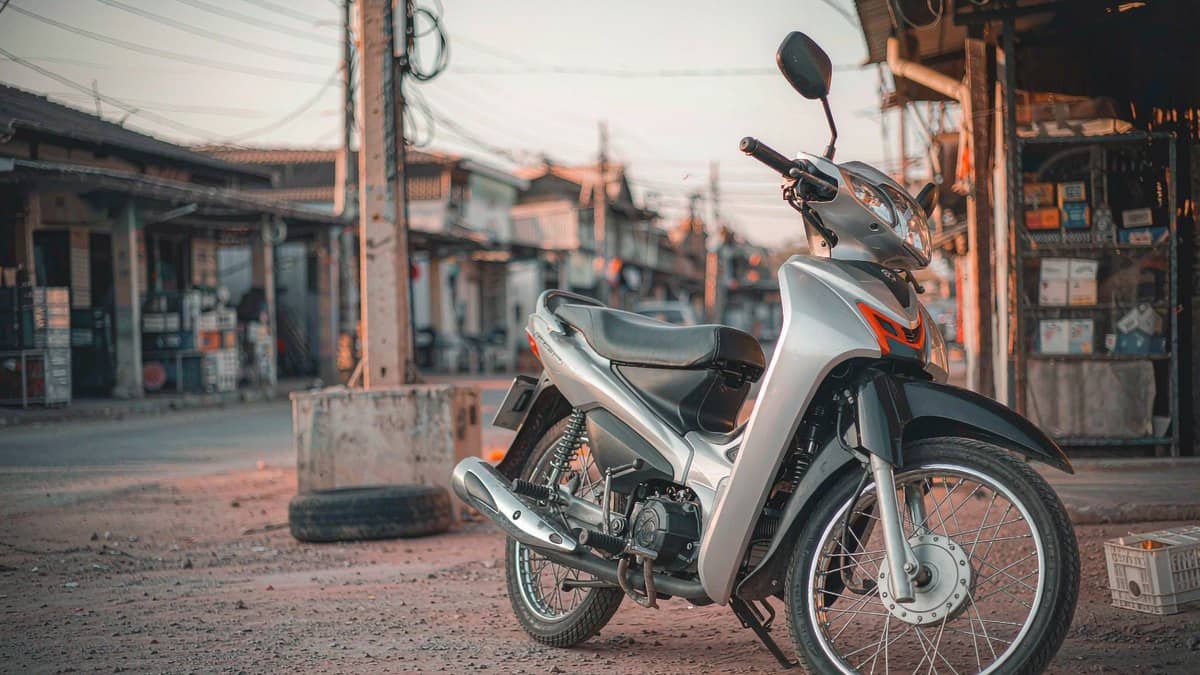
Honda CG125: The Parts Distributor's Stocking Guide for the Most Cloned Motorcycle on Earth
No motorcycle has generated more parts demand than the Honda CG125 — and much of that demand comes from bikes that never wore a Honda badge. The CG's overhead-valve pushrod engine was licensed, copied and re-engineered across every major Chinese factory, then exported across Africa, the Middle East and South America under dozens of names. For a parts distributor, the CG family is not one SKU line; it is the backbone of the commuter wear-parts trade, and stocking it well requires understanding both the original and its clones.
Why the CG Family Dominates Parts Demand
Three properties made the CG the world's taxi, delivery bike and farm motorcycle: the OHV engine that runs indefinitely on minimal maintenance and poor fuel; a simple steel frame that tolerates overloading; and a design so widespread that every mechanic can fix it. That last property is the commercial one — a bike that every workshop can service consumes parts everywhere. Across our market guide the CG platform appears in every region we cover; it is the one platform where stocking depth is never wasted.
The Wear-Parts Map
Engine Top End
The pushrod valvetrain is the CG's signature and its most distinctive parts line. Demand concentrates on:
- Cylinder and piston kits. 124.5cc bore standard, with oversizes (+0.25/+0.50/+1.00) moving in rebore markets. Complete kits with gaskets outsell bare pistons in the aftermarket.
- Camshaft and rocker arms. The OHV layout loads the rockers hard; worn rockers are a classic CG symptom (tapping that reappears after adjustment). Sell rockers in pairs with the shaft.
- Pushrods and lifters. Bent pushrods from over-revving are a repair, not a wear item — but stock them; the diagnosis ends in this bin.
- Valves, guides and seals. Standard wear line; valve-guide oil leaks are the classic high-mileage CG complaint.
- Head gasket and cylinder base gaskets. Consumed every top-end job; never sell kits without them.
Carburetor and Fuel
The stock CG125 carburetor maps to the PZ26/26mm piston-valve family, and the clone ecosystem has normalized a handful of dimensions across factories. Complete carburetors outsell repair kits roughly 3:1 in commuter markets — the labor to clean and re-jet approaches the cost of a new unit. Stock the complete unit for the platform, plus pilot and main jet sets for the altitude markets, and the fuel-tap petcock (a recurring leak point). Our carburetor range keys these by OEM cross-reference.
Clutch and Transmission
The CG runs a wet multi-plate clutch whose friction plates are the single highest-rotation wear part on the bike — overloaded bikes eat them in 8,000–15,000 km. Stock full plate sets (friction + steel) plus springs; sell springs with every set, since fatigued springs masquerade as worn plates. The clutch basket's slots wear from plate chatter on high-mileage units — our basket wear guide covers the replace-or-resurface decision. Chain and sprocket sets (420 pitch on most variants) are the other high-rotation line; heavy-duty X-ring chains earn their premium on overloaded bikes.
Brakes and Wheels
Classic CG variants run drum brakes front and rear — brake shoes for both ends are a constant-replacement line, and the rear shoe wears faster on cargo use. Newer and sportier clones often run a front disc; carry pads for those variants keyed by caliper type. Spoke sets, wheel bearings and speedometer drives round out the wheel line, with rear rims in demand where potholes are the norm.
Electrics
The CG ignition system is famously simple, which is exactly why its parts move steadily: CDI units, ignition coils, the alternator stator, regulator/rectifier, and the ubiquitous starter-motor and solenoid line on electric-start variants. Quality matters more here than on any other line — a failed CDI strands the customer, and a cheap coil that dies in the rainy season costs the workshop the customer relationship.
Service Intervals That Sell Kits
The CG's maintenance rhythm is a sales calendar if you stock by it. Chain adjustment and oil changes every 1,000–2,000 km put the bike in front of a mechanic monthly; valve-clearance checks at 4,000 km (pushrod clearance drifts with wear) open the top-end conversation; carburetor cleaning seasonally in dusty markets. Each visit is a natural point where a kit sells against a diagnosis: clutch plates at the slipping complaint, brake shoes at the service check, a top-end kit when compression drops. Distributors who bundle these intervals into printed service cards for the workshops they supply — interval table on one side, kit part numbers on the other — turn generic parts demand into ordered demand. It costs a print run and increases both basket size and order regularity.
The Clone Problem — and the Opportunity
Here is what changes your assortment: the CG platform spans at least four engine displacements (125, 150, 175, 200cc) and countless case castings across Chinese factories. The OEM Honda part numbers cover only the genuine bikes; the clones share dimensions in some parts and diverge in others. Three practical rules:
- Verify by dimension, not by badge. Cylinder studs, rocker arm dimensions and clutch-basket splines are where clones diverge. A supplier who publishes measurement data per SKU — as our OEM program does for distributors building their own badged lines — is worth their margin.
- Cover the highest-volume displacement completely. In most African and Middle-Eastern markets, the 125 and 150cc variants are 80% of the fleet; stocking both completely beats covering four displacements thinly.
- Sell kits, not parts. The top-end kit (piston, rings, gaskets, valves) and the full clutch set are what workshops order when the bike is already on the lift. Kit packaging lifts basket size and cuts picking errors.
The 150/175/200cc Clone Variants
Most of the clone fleet is not 125cc. The 150, 175 and 200cc derivatives share the CG architecture — same pushrod layout, same clutch pattern, same drum-brake DNA — with wider bores and stronger internals. For assortment purposes they are a second dimension on the same sheet: cylinder kits, pistons and rings are displacement-specific, while clutch plates, brake shoes, cables and electrics often interchange. Map interchanges explicitly and publish them; a counter that knows which lines carry across displacements can serve the whole CG family from shared depth instead of four separate inventories. Where interchange is uncertain, one sample and a pair of calipers settle it — the same discipline that governs every cross-reference in the carburetor line.
A Starter SKU List
For a distributor entering the CG line, this dozen covers the core rotation: complete carburetor + jet kit, cylinder/piston kit in standard and +0.50, valve sets and guides, camshaft, rocker pair, clutch plate set + springs, chain and sprocket kit, brake shoes front and rear, CDI, ignition coil, regulator, and fuel tap. From that base, expand by what your market actually consumes — the platform's demand data is everywhere, which is precisely why it is the best first line any parts distributor can build on. The clutch plate material guide and our clutch kit range cover the highest-rotation line in detail.