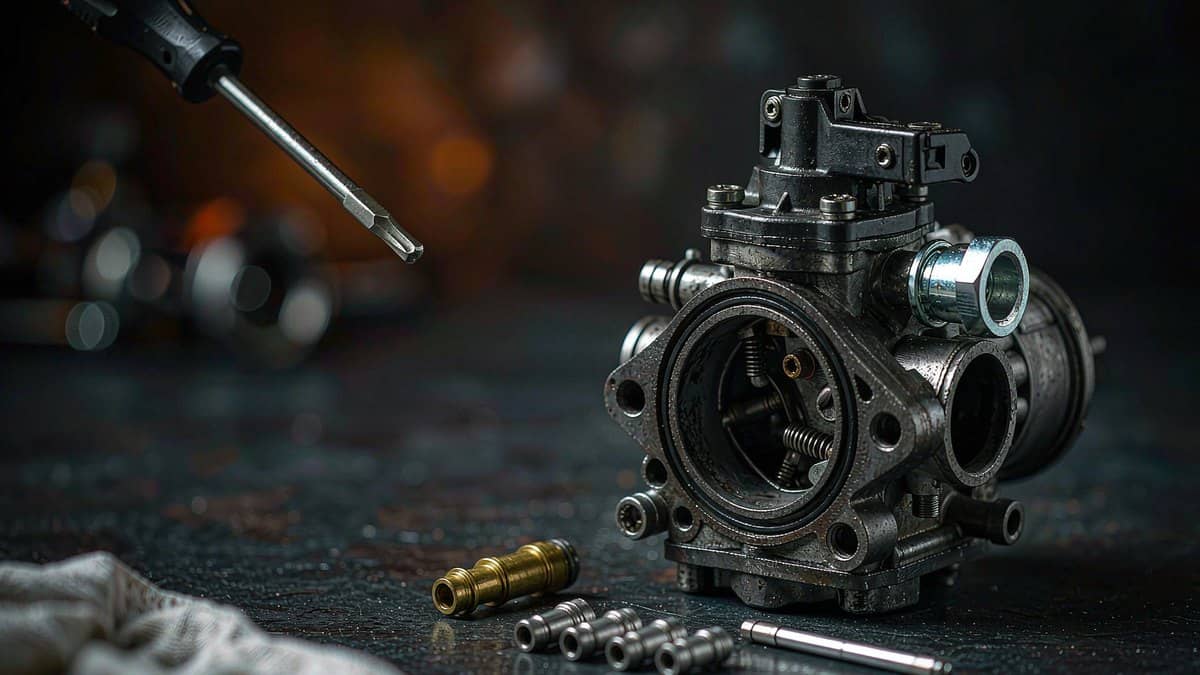
10 Signs Your Motorcycle Carburetor Needs Cleaning or Replacement
A carburetor rarely fails all at once. It fades — a slightly longer crank in the morning, a small flat spot when the throttle opens, and six months later the bike is on a tow rope. For repair shops, recognizing the pattern early is a service opportunity; for distributors, it explains why carburetors and repair kits are steady volume items in every market with carbureted fleets.
1. Hard Cold Starting
The classic first symptom. A richer-than-spec idle circuit or a partially blocked pilot jet forces the rider to crank repeatedly or hold full choke far longer than normal. Occasional hard starts in cold weather are normal; needing three or four attempts every morning is not. Note the pattern: fuel-injected bikes of the same model year starting normally alongside a carbureted one that struggles isolates the fuel system immediately.
2. Unstable or Hanging Idle
An idle that hunts up and down, hangs high after a blip, or simply dies at traffic lights points to pilot-circuit contamination or an air leak at the intake boot. If cleaning the pilot jet and checking the boot does not settle it, the throttle slide or its shaft may be worn enough to leak air under the slide — a wear item, not a dirt problem.
3. Hesitation When the Throttle Opens
A flat spot or stumble in the first quarter of throttle travel is the accelerator-pump or transition-circuit calling for attention. On slide carburetors it often means the needle jet or emulsion tube is gummed. This is also the symptom riders notice most, because it happens exactly when they ask for power.
4. Bogging Under Load or at High RPM
If the engine pulls cleanly to half throttle then falls flat, the main jet or float level is restricting fuel at the top end. A bike that used to reach an easy 90 km/h now straining at 70 is showing you this — and the owner is already shopping for "more power" when the real fix is a 20-minute jet clean.
5. Rising Fuel Consumption
A rich-running engine wastes fuel quietly. Riders in metered markets notice this first; in most emerging markets the tell is subtler — the bike that used to do a full workday on one tank now needs a mid-day fill. Enrichment from a stuck float needle or worn jet typically costs 10-20% in fuel economy before anything dramatic happens.
6. Spark Plug Color
The plug is the carburetor's report card. Black, sooty, dry deposits mean over-fueling; a white, blistered electrode means lean running and imminent piston risk; oily fouling points elsewhere (rings or valve guides) but often appears together with carburetor neglect. Teach customers to read this — it converts a vague complaint into a specific diagnosis, and a specific diagnosis sells the right part.
7. Black Smoke From the Exhaust
Unburned fuel leaving as black smoke confirms serious enrichment — usually a stuck float, a sunken needle, or a jet that someone "re-jetted" with a drill bit. Black smoke plus a fuel smell at the pipe is not a tuning preference; it is a repair.
8. Fuel Smell or Visible Weeping
A carburetor that weeps fuel at the bowl gasket or overflow tube has a sealing or float-valve problem. Beyond the fire risk and the fuel cost, raw fuel washing the cylinder wall dilutes oil and accelerates engine wear. Overflow staining down the crankcase is visible in seconds during any walk-around inspection.
9. Backfiring or Popping on Deceleration
Popping in the exhaust when the throttle closes means a lean idle mixture or an air leak igniting unburned mixture in the pipe. Riders often describe it as "exhaust trouble"; the intake side is where to look.
10. Hard Starting After Storage
Fuel left in a bowl for weeks evaporates and leaves varnish that gums jets and sticks float needles. A bike that ran fine before storage and refuses to run after it has told you exactly what happened. This single failure mode generates a large share of carburetor and repair-kit sales in seasonal markets.
Reading the Symptoms Together: A 5-Minute Field Diagnosis
Individual symptoms overlap, so sequence the checks instead of chasing one sign:
- Step 1 — walk-around: overflow staining, fuel smell, weeping bowl gasket (symptom 8) costs nothing to check.
- Step 2 — plug pull: one spark plug read (symptom 6) sorts rich, lean and non-fuel causes into three directions before anything is disassembled.
- Step 3 — idle behavior: a stabilizing spray of carburetor cleaner around the intake boot distinguishes an air leak (idle changes) from pilot-jet dirt (no change).
- Step 4 — road test: note where in the throttle travel the hesitation sits. First quarter points to transition circuits and the needle; top end points to the main jet and float level.
Five minutes of sequence beats an hour of guessing, and it produces a specific recommendation the customer can understand: which circuit, which fix, which part.
Clean or Replace? The Practical Line
Most symptoms above are cleaning jobs — varnish and dirt cause the majority of carburetor complaints, and an ultrasonic clean plus new gaskets and needle valve restores function at minimal cost. Replacement becomes the right call when you find any of these:
- Throttle shaft or slide wear. Measurable play at the shaft lets unmetered air past every jet combination. Bushings are rarely serviceable on commuter-bike carburetors.
- Damaged or stripped jet threads, bowl threads, or mounting flanges. A leaking flange cannot be fixed with gaskets forever.
- Corrosion in the body. Eroded or pitted venturi surfaces and corroded passages change metering in ways cleaning cannot reverse.
- Repeated returns. If the same unit comes back twice after cleaning, its wear state has crossed the line — fitting a quality replacement is cheaper for the customer than a third diagnosis.
The Storage Season Effect
In seasonal markets the pattern is reliable: after monsoon, after winter, and after the long school holidays, a wave of bikes comes out of storage running badly. Varnish from evaporated fuel (symptom 10) is behind most of it. Distributors who anticipate this — holding complete carburetors for the top commuter platforms plus repair kits ahead of the season — capture the wave; those who react order from their suppliers into the same wave and wait behind everyone else. The same logic applies at smaller scale wherever bikes sit idle: rental fleets rotating for low season, delivery bikes parked over holidays.
What This Means for Stocking
The symptom list doubles as a demand map: storage-related failures make complete carburetors a spring-and-post-monsoon item; wear-related failures (shafts, bowls, flanges) make complete replacement units steady year-round volume; and the varnish majority keeps repair kits — gaskets, needles, jets — turning fastest of all. Our carburetor catalog covers the major commuter platforms with per-model fitment, and if you are unsure which series fits a given engine, our size and compatibility guide explains the model selection logic. For diagnosing mixture problems after the carburetor is confirmed healthy, plug color remains the fastest field check — we cover the details in our spark plug reading guide.