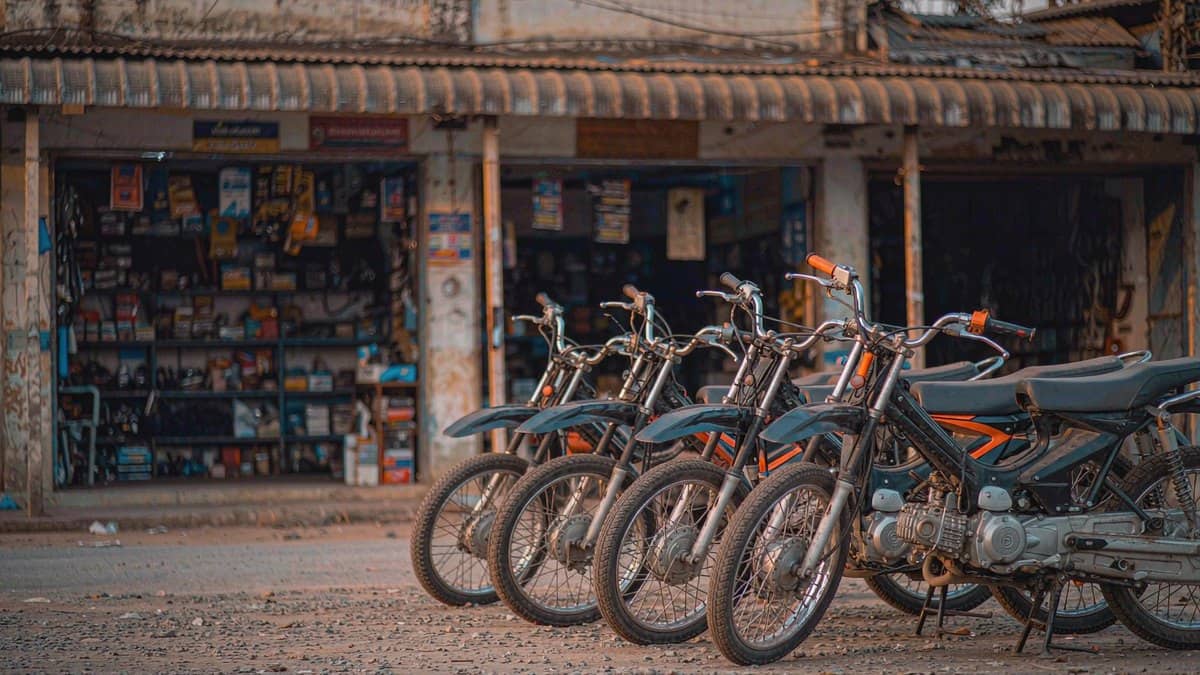
Top Motorcycle Models in Africa & Southeast Asia and Their Most-Replaced Parts
In emerging markets, the parts business follows the bike population, not the brochure. A distributor who stocks for the models actually running on local roads — and for the parts those models actually consume — turns inventory faster than a competitor carrying a technically richer but mismatched catalog. This guide maps the dominant commuter platforms in Africa and Southeast Asia to their most-replaced components.
Africa: The Commuter Workhorses
Across West, East and Central Africa, four platforms account for a disproportionate share of daily-riding motorcycles:
- Honda CG125 / CG150 family. Decades of local assembly and an enormous installed base make CG-series fitment the de facto standard in many West African markets. Engines are air-cooled pushrod designs valued for rebuildability.
- Bajaj Boxer (BM100/BM150/CT100). Dominant in East Africa, especially Kenya, Uganda and Tanzania, where Boxer-based boda-boda fleets define the taxi motorcycle segment.
- TVS Star HLX / Sport. The second pillar of East African fleets, sharing many consumable dimensions with the Boxer segment.
- Yamaha Crux / Saluto and Suzuki AX100 survivors. Smaller share but loyal followings; AX100 two-stroke parts remain a niche with almost no competition.
Heavy usage defines the wear profile: these bikes carry passengers and cargo daily on unpaved roads, so parts wear faster and by mileage rather than years.
Southeast Asia: The Scooter Continent
Southeast Asia's profile is almost inverted — small-displacement scooters and underbones dominate:
- Honda Wave 110/125, Beat, Vario, Click. Indonesia, Vietnam, Thailand and the Philippines together run tens of millions of these. CVT-driven, so their wear centers on belts, rollers and clutch shoes rather than chain kits.
- Yamaha Mio i 125 / Mio Sporty. Strong in the Philippines and Indonesia; fuel-injected in current generations.
- Suzuki Smash / Raider 115. A persistent presence in the Philippines and Indonesia.
- Underbone 110-135cc (XRM, Crypton families). Semi-off-road usage in rural areas keeps chain, sprocket and suspension parts in constant demand.
The Most-Replaced Parts, Ranked by Turnover
Across both regions, workshop owners name the same consumption ranking, with regional variation:
| Rank | Part | Typical replacement driver | Africa / SEA demand profile |
|---|---|---|---|
| 1 | Brake pads / shoes | Heavy loads, dust, stop-go fleets | High in both; drum shoes still major in Africa |
| 2 | Chain & sprocket kits | Dust, overload, poor lubrication | Very high in Africa; high for underbones in SEA |
| 3 | Clutch friction plates | Passenger load, half-clutch riding | High both regions; CG and Boxer platforms fastest |
| 4 | Spark plugs | Mileage consumable, cheap trial purchase | Universal; volume item for every distributor |
| 5 | Carburetors (and repair kits) | Fuel quality, altitude, wear | Strong in Africa; carb models still outsell FI conversions |
| 6 | CVT belts, rollers, clutch shoes | Scooter drivetrain wear | Very high in SEA, minimal in Africa |
| 7 | Shock absorbers & fork parts | Road conditions, overload | High both regions; complete shocks common in Africa |
| 8 | Bearings, oil seals, gaskets | Engine and wheel rebuilds | Steady both regions; sold as rebuild kits |
| 9 | Brake discs / drums | Corrosion, scoring, wear limits | Discs growing in cities; drums dominate rural fleets |
| 10 | Mirrors, levers, cables, bulbs | Crash and wear items | Constant small-ticket volume both regions |
Regional Differences Inside Each Market
Treating "Africa" or "Southeast Asia" as one market leads to a catalog that is average everywhere and ideal nowhere. The differences that matter for stock:
- West Africa. CG-family dominance, high dust, long-distance intercity riding. Demand concentrates on engine wear parts, chains, brake shoes and complete shock absorbers; carbureted models remain the majority.
- East Africa. Boxer and TVS fleets doing dense urban taxi work — short trips, constant stopping, heavy passenger loads. Clutch plates, brake shoes and chain kits move fastest, and fleet operators buy monthly in volume.
- Indonesia and Vietnam. Enormous scooter populations with a strong preference for OEM-look parts and branded packaging; CVT components and FI-era service parts matter more than carburetors.
- Philippines and rural Indochina. Underbones used as light cargo bikes on mixed surfaces — chain and sprocket wear is unusually high, and suspension parts sell steadily.
The practical consequence: two distributors in the same country can justify completely different top-20 lists. Build your list from local workshop data, then use regional patterns like these as a sanity check.
Seasonality and Fleet Cycles
Parts demand in these markets is not flat across the year, and the pattern is predictable:
- Rainy season drives brake and tyre-related consumption up — wet braking wears friction material faster and corrosion attacks neglected discs and drums.
- Harvest and school terms change cargo and passenger loads in rural areas; fleet operators stock up ahead of them.
- Fuel price moves shift mileage between motorcycle taxis and other transport within weeks, which shows up in consumable sales about a month later.
Two consequences for buyers: place your largest import order so it lands before the rainy season, not during it, and keep roughly six weeks of cover on your top five SKUs — a stock-out during peak season sends fleet customers to a competitor who will then be quoted on every subsequent order.
What This Means for Stock Planning
Three stock-keeping rules follow directly from this demand shape:
- Depth beats breadth on the top 20 SKUs. Brake pads and clutch kits for CG/Boxer/Wave families will out-turn everything else in your warehouse. Never let the hero SKUs stock out to fund a long-tail expansion.
- Fitment precision is your margin. A brake pad that "looks the same" but shifts 2mm on pad width generates returns, not sales. Source from suppliers who publish per-model fitment data rather than "for Honda" generic claims.
- Watch the fuel-injection transition. SEA's newer scooter fleets are increasingly FI, shifting carburetor demand toward repair kits and older-platform replacements — while Africa's carb-heavy population keeps whole-carburetor demand strong for years.
Quality Expectations in These Markets
A paradox worth understanding: the harshest duty cycle in the world — overloaded commuter bikes on unpaved roads — is served by the most price-sensitive buyers. The winning position is not the cheapest pad but the pad that survives noticeably longer than the market floor at a modest premium. Fleet operators, who buy monthly in volume, calculate cost per kilometer; they are the customers who reward that engineering and reorder without price shopping.
Packaging and Branding for These Channels
The same brake pad sold in Lagos and in Jakarta often needs to arrive in different packaging, and getting this wrong quietly caps your margin:
- Small-lot cartons for repair shops. Shops serving daily riders buy in 5-10 piece lots. Blister or small printed boxes with the fitment printed on the face sell faster than a sealed 100-piece master carton that the shop has to break open.
- Master cartons for sub-distributors. They resell to shops, so they want clean master cartons with readable model lists on the outside — a carton that cannot be identified without opening it slows their warehouse down and makes your SKU the one they skip.
- Private label demand is real and rising. Regional distributors increasingly want their own brand on the box, with a documented OEM/ODM supply behind it. Factories that support low-volume private label runs with print-ready artwork turn that demand into a retention advantage over suppliers who only sell generic cartons.
- Marking that survives the trip. Printed labels on dusty, humid routes rub off within weeks. Inkjet or heat-transfer marking on the part itself, plus a batch code, is what allows a distributor to trace a complaint back to a production lot.
None of this is expensive per unit; all of it is costly to retrofit after the container has shipped. Agree packaging on the purchase order, with the artwork approved before the production run starts.
Building the Catalog
If you are stocking for these markets, start from the platforms above and work outward: consumables for the top five models first, then service parts, then cosmetic and body items last. Our brake pads, clutch kits and carburetors catalogs are indexed by platform fitment including CG, Boxer, Wave and Mio families, and you can send us your model list for a coverage check before committing to a first order.