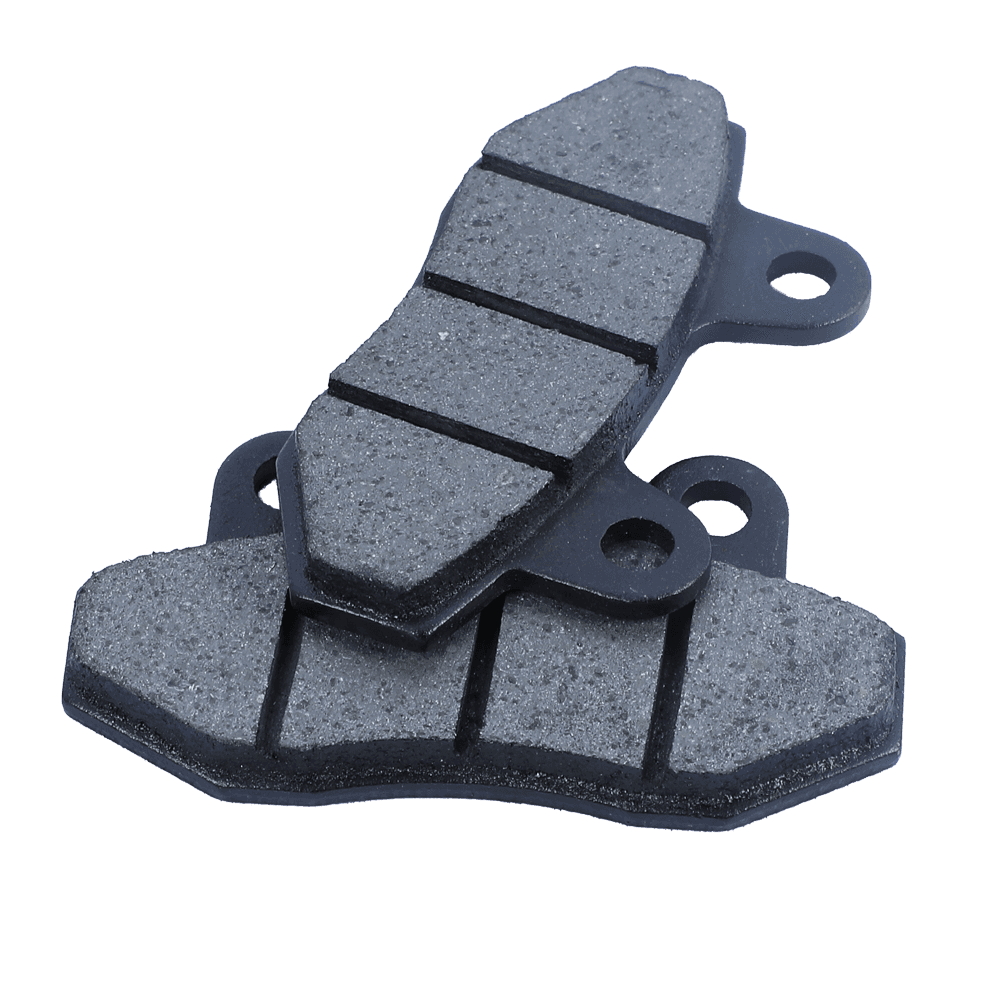
ECE R90 pour plaquettes : ce que la norme exige vraiment
ECE R90 is frequently described as a certification that a brake pad is "approved". That description is misleading, and the misunderstanding causes both bad purchasing decisions and bad marketing claims.
What R90 actually is
Regulation 90 is an equivalence standard. Its purpose is to confirm that a replacement brake pad performs like the original equipment pad it is intended to replace — so that fitting it does not degrade the vehicle's braking behaviour.
That is a narrower claim than "safe" or "high performance". A pad can meet R90 and still be a poor choice for a heavy bike ridden hard, because the equivalence is established against a specific original pad on a specific test sequence.
What it tests
- Friction performance: measured against the reference pad across a defined speed, pressure and temperature sequence.
- Speed sensitivity: friction must stay within a tolerance band as test speed rises.
- Compressibility: how much the pad compresses under load, which affects pedal or lever travel.
- Mechanical strength: shear strength of the bond between friction material and backing plate, and hardness.
All of this is done on a dynamometer against a reference pad of the same fitment, not on a vehicle.
What it does not cover
R90 says nothing about wear rate, noise, dust, disc wear, or behaviour in standing water. It also says nothing about production consistency — the approval is granted to a friction material and a production process, and the control of that process is the manufacturer's responsibility.
This is why a buyer who only asks "is it R90?" learns less than they think. The useful follow-up questions are about batch testing and traceability.
Documentation worth asking for
- The regulation number and the specific approval, with the friction material identification code.
- Batch-level test data for friction, shear strength and hardness.
- A written description of the containment procedure if a batch fails.
- Traceability from the marking on the backing plate back to the batch record.
A note on labelling
Where R90 approval is claimed, the marking on the product has to allow the approval to be traced. A box that says "R90" with no material code and no batch marking is a claim without a trail, and in a dispute that is worth very little.
Commentaires (0)
Aucun commentaire pour l'instant. Soyez le premier !