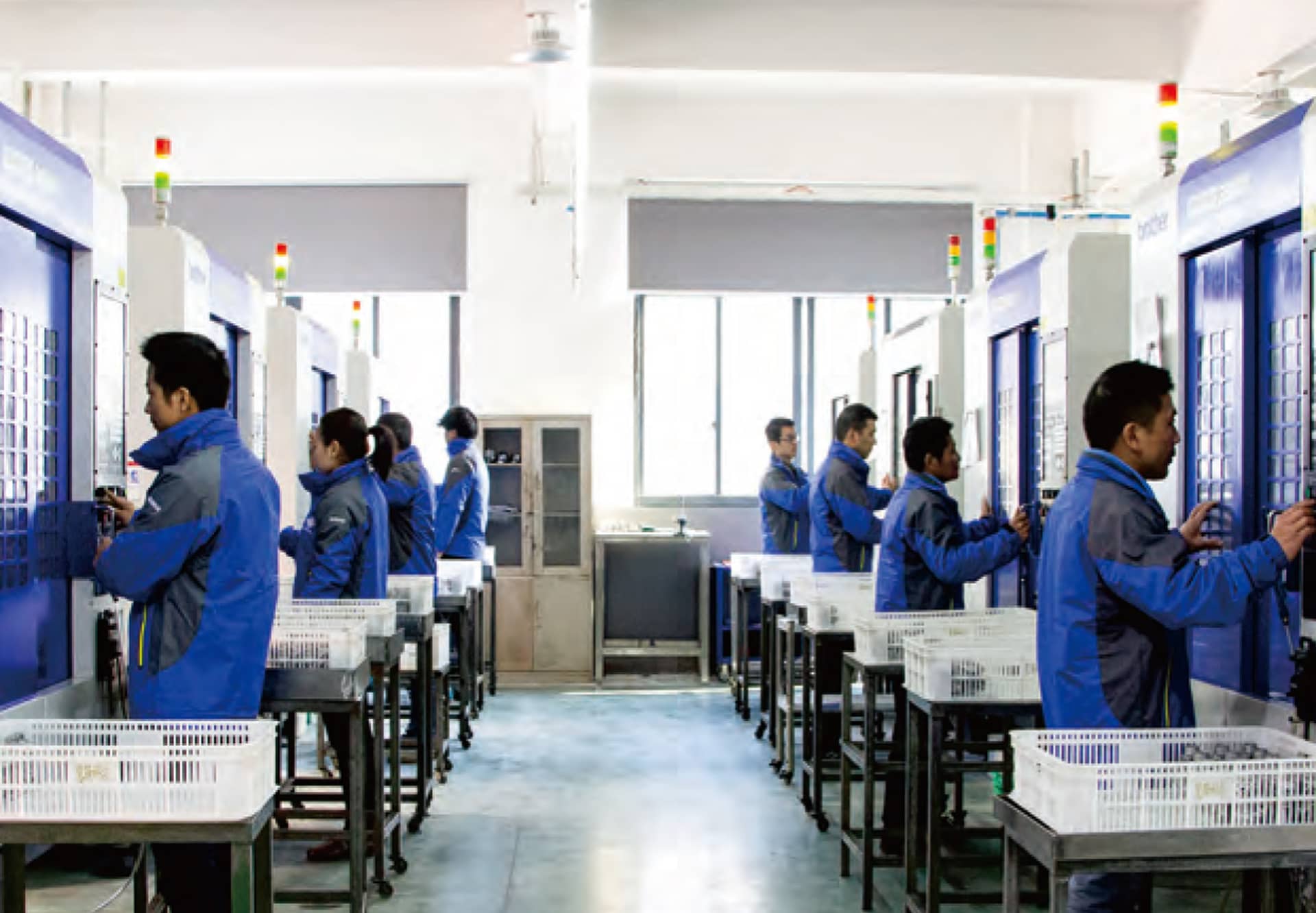
Développement de disques flottants CNC : Turquie
Client
A performance parts distributor in Istanbul, Turkey
Secteur
Performance Aftermarket
Indicateurs clés
Le Défi
The distributor was buying 300 mm floating discs for popular 250–400cc models from a supplier whose flatness drifted outside tolerance. Riders felt it as a pulsing lever and a shudder under braking, and the distributor was absorbing the returns.
The problem was not the design. It was that the discs were being laser cut and then only surface ground on one face, so the plate carried the residual stress of cutting into the friction surface.
Notre Solution
We rebuilt the process around flatness rather than around cycle time.
- Material: 420J2 stainless for the rotor, 6061-T6 aluminium for the carrier.
- Machining: laser cut, stress relief, then double-disc grinding so both faces are referenced to each other instead of to a fixture.
- Floating buttons: ten buttons per disc with a controlled preload, allowing thermal expansion without rattle at low speed.
- Inspection: 100% runout and thickness-variation check, recorded per disc serial.
- Samples: nine days from drawing to shipped sample, which is what won the project.
Le Résultat
No vibration claims in 14 months across the range. The distributor expanded from three references to eight, and now uses the per-disc inspection record as a selling point with workshops.
Why a disc pulses
A brake disc that pulses under the lever is almost always varying in thickness or in flatness. As the caliper squeezes, thicker sections push the pads apart and thinner sections let them close, so hydraulic pressure at the lever oscillates once per revolution.
Riders often describe it as a warped disc, and in some cases it is — but a disc that was never flat to begin with produces the same symptom from day one, and no amount of bedding-in will fix it.
Where the flatness was being lost
Laser cutting leaves a heat-affected zone and locked-in stress. If the plate is then ground on one face only, material is removed from one side of a stressed plate and the disc relaxes into a slight bowl. It measures acceptably on the bench and goes out of tolerance once it heat cycles on the bike.
Stress relief before grinding, and grinding both faces against each other, removes that mechanism. It costs cycle time, which is exactly why cheap discs skip it.
The floating question
Floating discs are not automatically better. A floating disc allows the rotor to expand and to self-centre in the caliper, which helps at temperature. But the buttons need a controlled preload: too loose and the disc rattles at walking pace, too tight and it behaves like a fixed disc with extra parts.
Points forts du projet
- Méthodologie de développement agile
- Chef de projet dédié
- Support et maintenance 24/7
Prêt à obtenir des résultats similaires ?
Contactez-nous pour discuter de votre projet et voir comment Motoks peut vous aider.
Contacter Notre Équipe