Embrayage humide qui patine : six causes à vérifier
A clutch that slips under load is telling you one thing: the plates are not transmitting the torque the engine makes. Six different faults produce that symptom, and only the first two need new plates. Diagnose in this order.
1. Worn friction plates
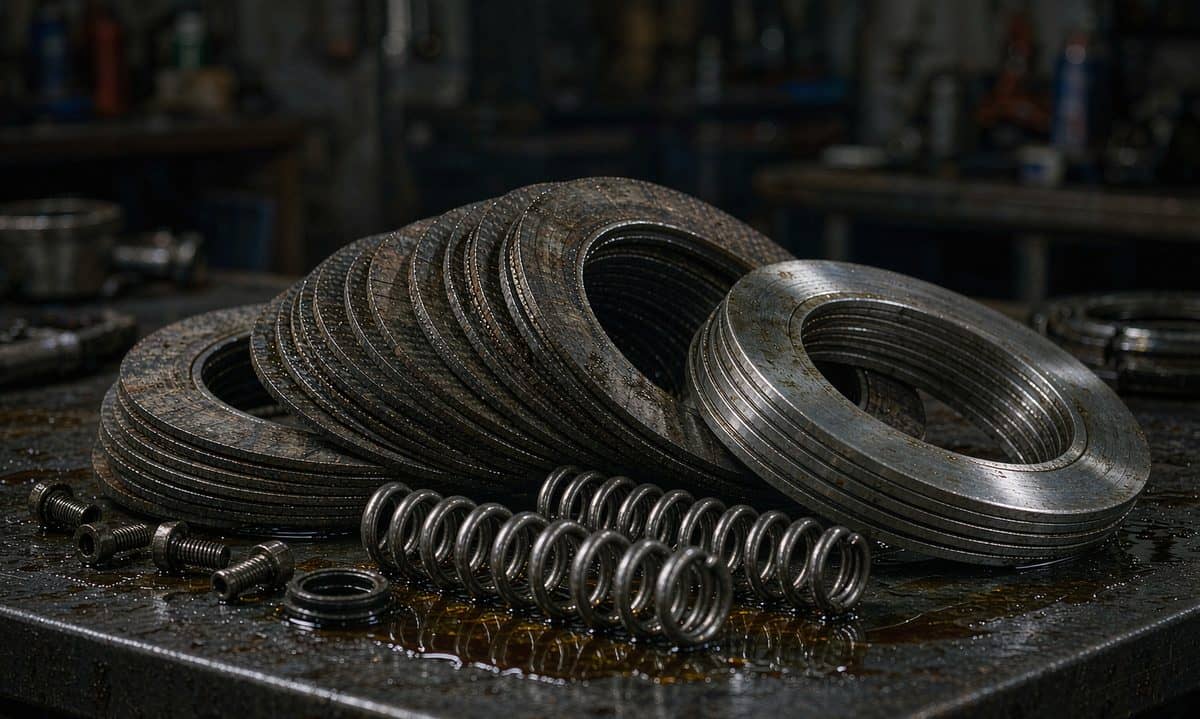
The most common cause, and the easiest to confirm: measure plate thickness against spec, and check the wear grooves on the fibre surface. If total stack height is below the service limit or any single plate is below its minimum, replace the set — never one plate. Mixed old/new plates wear against each other unevenly.
2. Weak or collapsed springs
Measure free length on all springs and compare across the set; a single heat-cycled spring that is 1mm shorter than its siblings unloads its share of clamping force. Replace springs as a set whenever you replace plates.
3. The wrong oil
Friction-modified oils — the kind labelled "fuel economy" for car engines — contain friction modifiers that a wet clutch cannot tolerate. Symptoms of modifier contamination include slip that appears right after an oil change. This is the most preventable cause on the list: the oil specification is printed on every service page for a reason.
4. Overfilled oil or wrong viscosity
Too much oil (or oil too thick when cold) raises the oil level inside the clutch basket and lets the plates hydroplane on a film. If the slip improves dramatically when the bike is hot and worse when cold, suspect oil condition or level first.
5. Cable or pushrod free play
A clutch with no free play at the lever is being held slightly disengaged all the time — it will slip, and it will also overheat the plates. Set free play to spec before condemning any hardware. On hydraulic systems, check for air in the line doing the same thing.
6. Glazed or heat-scored steel plates
The one everyone misses: steel plates that have been overheated develop a blued, glassy surface that fibre plates cannot grip. They measure within spec and pass a visual "looks fine" check. Hold one at an angle to the light — if it reflects like a mirror, it is glazed. Light scuffing on emery cloth in a flat pattern can rescue mildly glazed plates; heat-warped ones must be replaced.
A five-minute confirmation test
With the bike in fourth gear against a wall (engine off), pull the clutch in and try to rock the bike. Then start the engine, engage first gear with the clutch pulled, and load it against the brake at low RPM. A healthy clutch stalls the engine promptly; a slipping one lets the engine lug on. Whatever you find, fix the free play and the oil first — they are free, and they mask every other diagnosis.