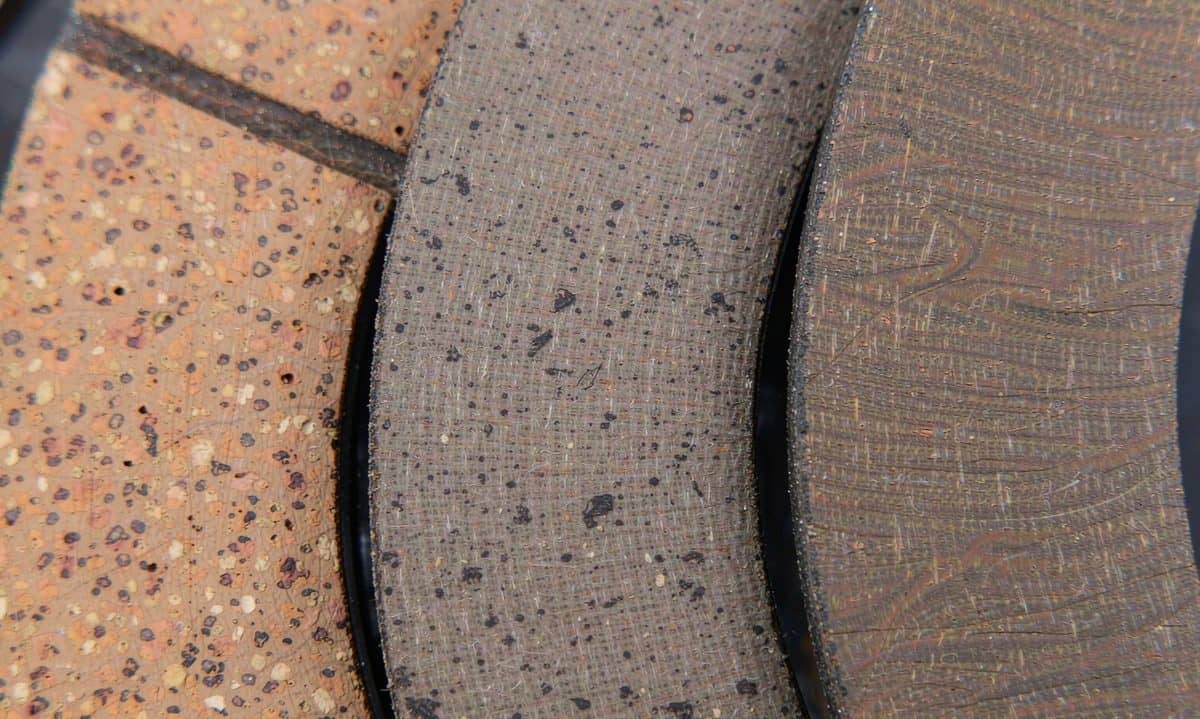
Matériaux de disques d'embrayage : liège, papier, kevlar, fritté
Two clutch kits with identical dimensions can behave completely differently because the friction material is different. This is the least visible specification on the box and the one that decides customer satisfaction. Here is the practical map of the four compounds we manufacture.
Cork composite — the comfort choice
Traditional cork-based material has the gentlest engagement: progressive, forgiving, tolerant of clumsy launches. Heat tolerance is modest and wear life is middle of the pack. It belongs on commuters, scooters and learner bikes, where engagement smoothness matters more than ultimate capacity. Cork also tolerates marginal oil condition better than most compounds — a real advantage in fleets with imperfect service discipline.
Paper / organic composite — the all-rounder
Modern paper-based materials (a cellulose-aramid-resin composite, despite the name) offer the best balance of capacity, smoothness and price. They take roughly 20–30% more torque than cork at equal size, engage cleanly, and last well in normal service. This is the material we recommend as the default replacement for the broadest range of engines, and it is what most OEM service kits specify.
Kevlar / aramid — the durability play
Aramid-fibre materials trade a slightly harsher engagement for dramatically better wear life and heat resistance. They are the choice for heavy-duty applications: loaded commuters in mountain cities, three-wheeled cargo bikes, and anything with a sidecar. Note that aramid plates often need a slightly longer bed-in before full bite develops — worth telling the customer, or they will judge the kit in its first week.
Sintered bronze — the heat shield
Sintered metal plates survive temperatures that destroy every organic compound, and they transmit torque without deflection. The costs: harsh engagement, aggressive wear on the steel plates, and a weight penalty. They belong on racing applications and extreme-duty machines — not on a 125cc commuter, where they make the clutch feel like a light switch and accelerate basket wear.
Choosing by duty, not by price
| Application | Recommended material | Why |
|---|---|---|
| City commuter / scooter | Cork or paper | Smooth engagement, forgiving |
| General replacement market | Paper composite | Best balance of price, life, feel |
| Heavy-load / mountain fleets | Kevlar aramid | Wear life under sustained load |
| Race / extreme heat | Sintered bronze | Fade resistance, torque capacity |
If you wholesale kits, ask your supplier which material is in the box and what duty it was designed for. A kit specified for the wrong duty is not a bargain at any price — it is a warranty return waiting for a date.