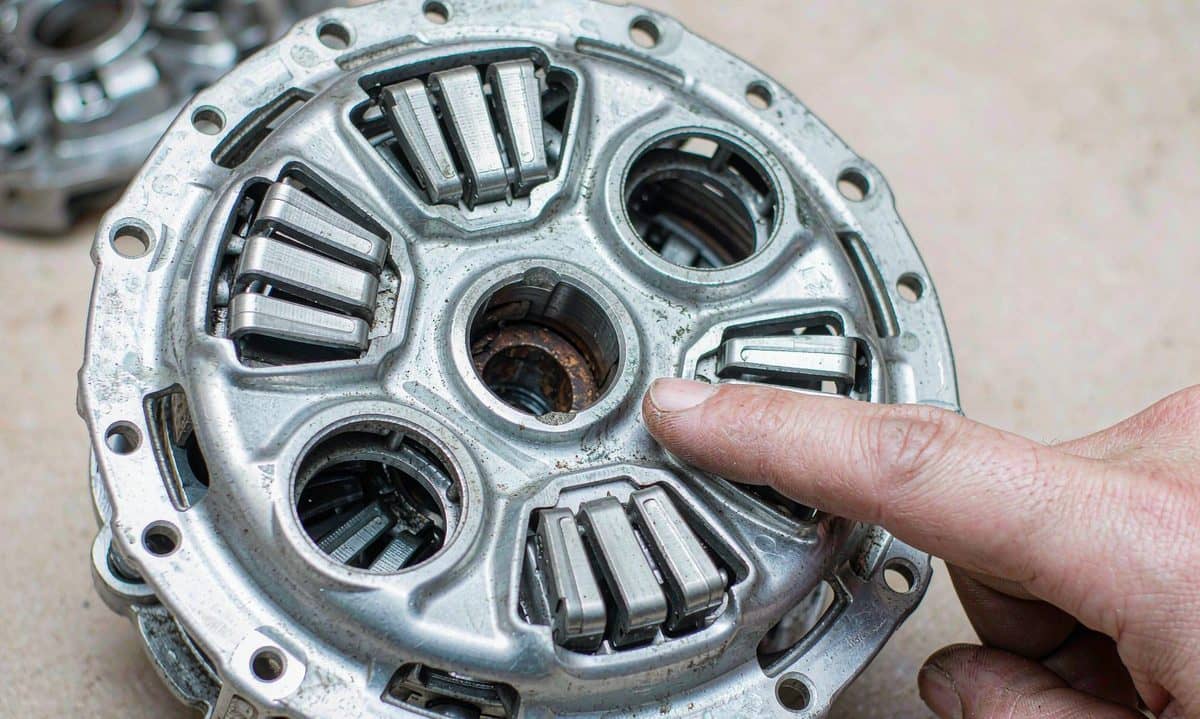
Usure de la cloche d'embrayage : quand remplacer plutôt que caler
Every high-mileage clutch basket shows grooves where the steel plates bang against the drive fingers. The question is never "is there wear" — it is "is the wear changing how the clutch works". Here is how we draw that line on our own production benches.
What basket wear actually does
The fingers of the basket are the drive surface for the steel plates. Grooves create two problems: the plates catch in the grooves when the clutch is released (drag and notchy lever feel), and the plate stack sits unevenly (uneven loading, localized hot spots, accelerated fibre wear). Note that the grooves themselves rarely cause slipping — that is almost always plates, springs, oil or free play.
Measuring honestly
- Depth: run a fingernail across the groove. A groove you can barely catch is cosmetic. One that stops your nail dead — typically deeper than 0.3mm — starts to matter.
- Uniformity: even wear all the way around each finger is normal operating wear. Deep steps on some fingers only point to a warped or glazed plate stack grinding at one spot.
- Secondary damage: cracks radiating from finger roots, or a basket that rings audibly when tapped, mean replacement regardless of groove depth. Aluminium fatigues; grooves do not matter if the casting is cracked.
Why re-shimming is a trap
The popular quick fix for basket-groove drag is adding shim washers to push the plate stack clear of the grooves. It works for a month — and it quietly removes your end-play margin. Beyond a point, the stack runs preloaded, the clutch drags worse than before, and the fibres overheat. Shimming is a diagnostic tool, not a repair: if one shim transforms the feel, you have confirmed basket wear is the problem, and the real fix is a basket.
When replacement is the only answer
- Grooves deeper than ~0.3mm, or any step you can feel clearly with a nail.
- Any crack, anywhere on the basket or pressure plate.
- Lever feel that is notchy at the bar even with correct free play and fresh oil.
- Clutch drag that survives a full cable/hydraulic adjustment.
One production note for wholesalers: baskets for CG/CB-family engines are a genuine volume item precisely because they are neglected — most riders replace plates three times before anyone inspects the basket. If your market has a big installed base of older bikes, a notched basket is the hidden reason your "perfect" clutch kit gets a three-star review. Consider pairing kit SKUs with a basket inspection card in the box.