كيف تتحقق من مورد قطع الدراجات قبل الطلب الأول
Sourcing from China is a solved problem — for people who verify. The motorcycle parts trade has both genuine manufacturers and trading companies with beautiful catalogs, and nothing on a website distinguishes them. This is the verification sequence we recommend to every new wholesale partner (and the one our own buyers run on sub-suppliers).
Step 1: verify the entity, not the website
- Request the business licence and check the registered scope — a company registered as a "trading" entity is a trading company, whatever the signature block says.
- Cross-check the licence number on official registries; confirm the bank account name matches the licence name. A mismatch is the single most reliable fraud signal in this trade.
- Ask which brands' parts they currently produce under contract (not "compatible with"). Contract manufacturers can usually say so; middlemen hesitate.
Step 2: evaluate samples like a QC engineer
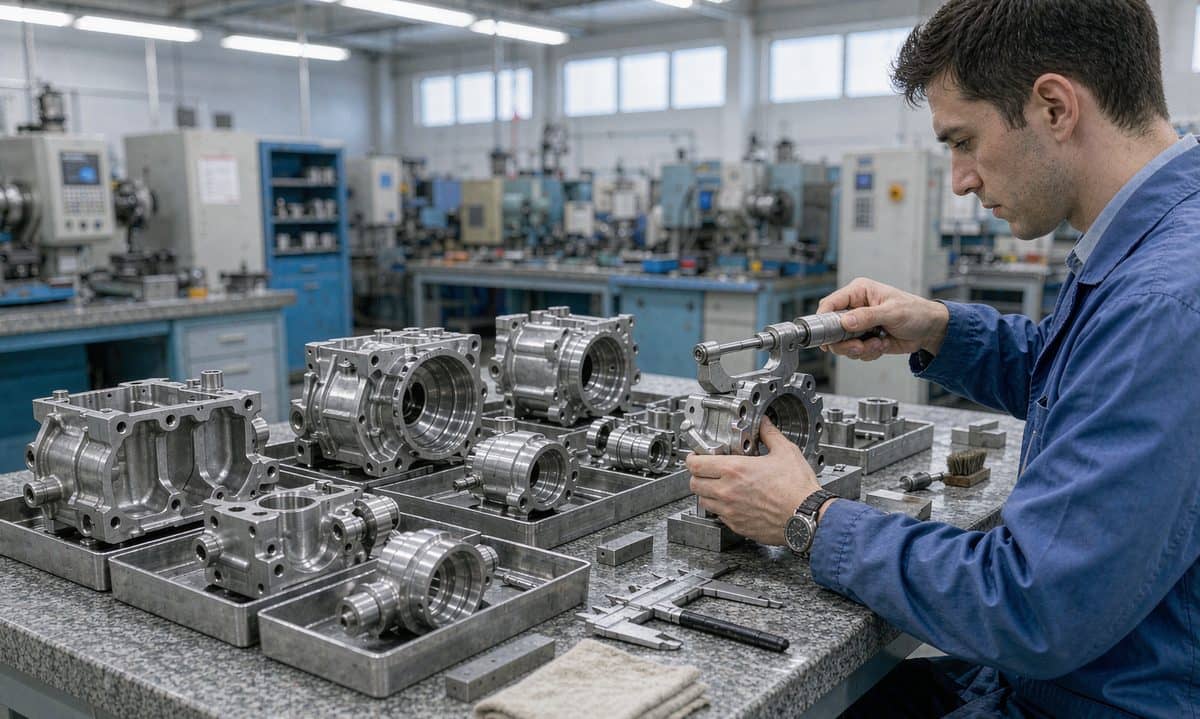
Samples must be paid for — free samples select for suppliers who discount their own quality testing. Evaluate against measurable criteria:
- Carburetors: bore diameter, float height tolerance, jet numbering accuracy (verify with a pin gauge), gasket material quality.
- Clutch kits: fibre hardness consistency across plates, spring free length spread, steel plate flatness.
- Brake pads: compound marking, backplate coating, shear strength of the bond (a padded vise and a hammer tells you a lot).
- Discs: runout, thickness variation, hardness stamp, packaging protection.
Keep a written sample evaluation sheet per supplier. Six months later it is the only thing that tells you whether quality drifted.
Step 3: audit signals, if not a full audit
An on-site audit is ideal but not always possible at first order. Remote signals that correlate strongly with a real factory: video walk-through of the specific production line (not a marketing reel), photos with today's newspaper (yes, it still works), live video call from the shop floor, and third-party inspection reports dated within the year. Refusal of all four is information.
Step 4: the pilot order
First order should be a pilot: small volume, mixed SKUs, clear acceptance criteria written before shipment. Put the criteria in the PO, not the email thread. Use a third-party inspector (USD 200–300 per man-day) for the pre-shipment inspection. One clean pilot order tells you more than six months of WeChat.
Red flags that justify walking away
- Bank account name ≠ licence name.
- Prices dramatically below the market band — quality in this industry has a floor, and quotes under it are finding something to remove.
- Unwilling to accept third-party inspection.
- "Same factory as [famous brand]" without any verifiable detail.
- No written warranty terms on returns of defective goods.
We hold all of the above as policy — licence, sample evaluation, line video, pilot terms, warranty in writing — because we ask our partners to do the same with us. Verification is not distrust; it is how both sides price risk correctly.