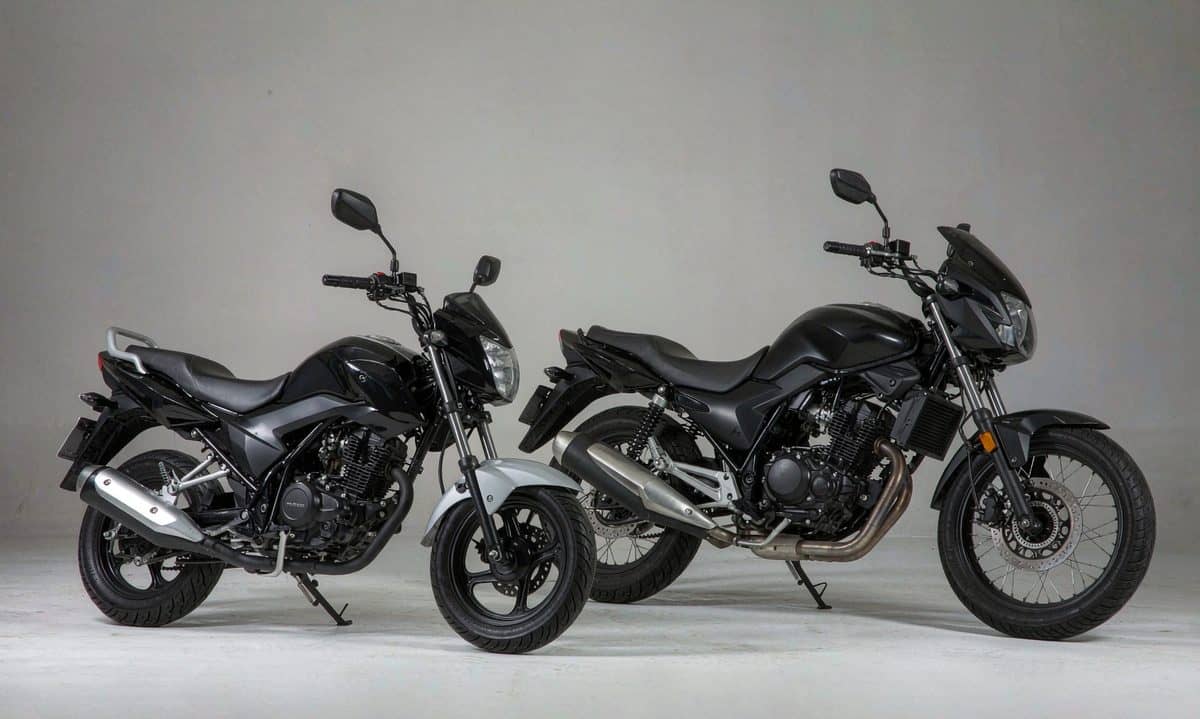
ما يتغير فعلياً بين دراجة 125cc ودراجة 250cc
On paper the difference is a number. In engineering terms, a 250cc commuter is not a 125cc commuter scaled up — it is a different set of compromises, and buyers deserve to know what actually changes before they commit a fleet or a product line to either.
Performance: less dramatic than you expect
A typical 125cc commuter makes 9–11 hp; a typical 250cc makes 17–20 hp. That is roughly double — but the 250 is also heavier by 15–25 kg and often geared longer. The felt difference is real where it matters: highway-capable cruising (a 125 is fundamentally a 80–90 km/h machine; a 250 cruises at 100–110 with reserve), two-up capability, and hill-climbing with load. In dense city traffic below 60 km/h, the gap narrows to almost nothing — which is why 125s dominate courier fleets in dense cities and 250s dominate inter-city routes.
Components: where the budget goes
This is the part brochures skip. Moving up in displacement forces real component upgrades:
- Brakes: 125s run small fixed discs or drum rears; 250s need larger discs and compounds that handle real heat — this is where our pad and disc SKUs diverge between the classes.
- Suspension: a 250 carrying 130 km/h loads cannot live with 125-spec damping; expect adjustable preload as a baseline, emulsion-to-piggyback shocks depending on price point.
- Frame and wheels: typically one size up in tubing and bearings, which is most of the weight gain.
- Clutch: plates move from 3–4 to 4–6 pieces, and material grade matters more — load per plate rises.
Running costs: the honest math
Fuel consumption on a 125 is typically 1.8–2.2 L/100km; a 250 runs 2.5–3.2. Tyres cost 20–40% more in the 250 class. Chain and sprocket kits likewise. Insurance and registration vary by market but generally track displacement. Over a 30,000 km service life, a 250 costs meaningfully more to run — the question is whether the routes it serves justify it.
Which market buys which
| Use case | Recommended | Why |
|---|---|---|
| Dense-city courier and delivery | 125cc | Lowest cost per km, agility, easy parking |
| Suburban commuting, some highway | 150–200cc | Highway survivability without 250 running costs |
| Inter-city, two-up, hills | 250cc | Reserve power is safety margin |
| Cargo three-wheelers | 200–250cc | Load and gradient demand |
For OEM buyers, one more practical note: parts commonality between the two classes is lower than it looks. Shared electrics and controls, yes — but brakes, suspension, clutch and drive components are class-specific. Plan your spare-parts stocking by displacement class, not by model year, or you will carry double inventory for half the coverage.